Get Full Government Meeting Transcripts, Videos, & Alerts Forever!
Get email alerts on the Artificial Reef topic
No spam. Unsubscribe anytime.
Local anglers, scientists push to revive Jacksonville artificial reef program with $60,000 FWC grant application
Summary
Participants at the Jacksonville Waterways Commission described plans to apply for a $60,000 Florida Fish and Wildlife Conservation Commission grant to begin rebuilding offshore reefs, mobilize local matching funds and coordinate regional partners to restore a once-active reef program.
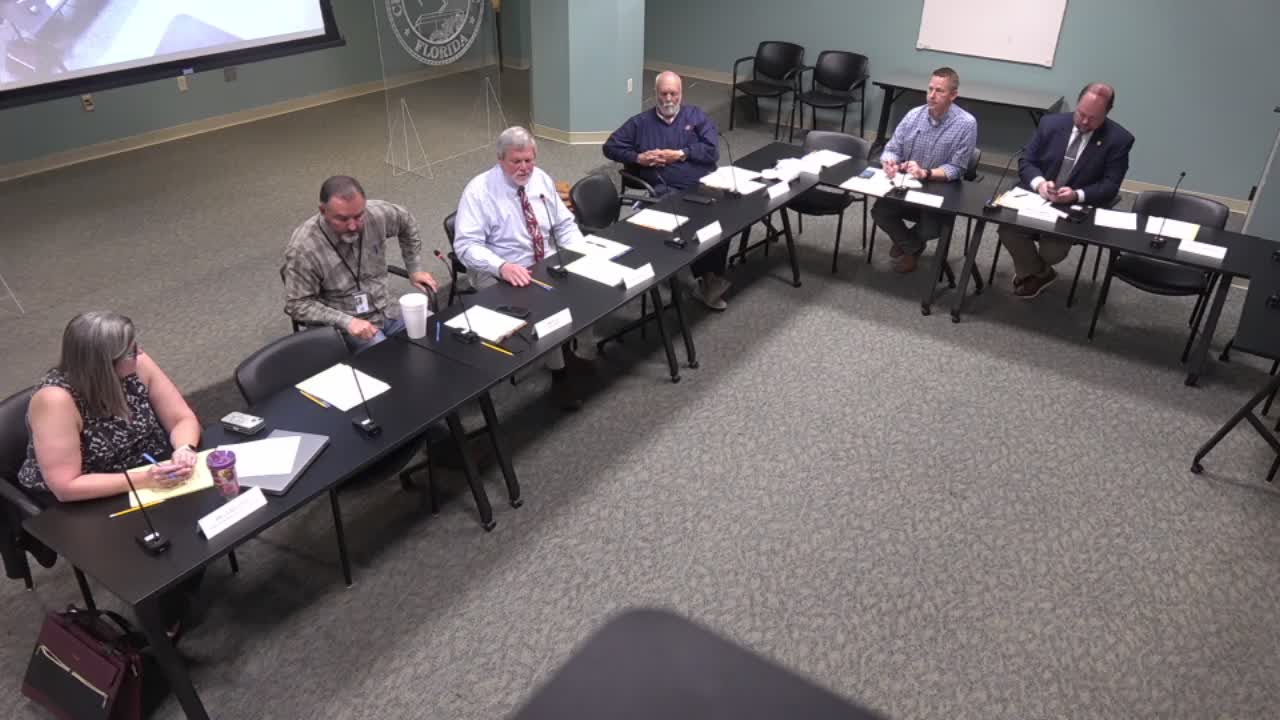
At a Jacksonville Waterways Commission, River Shoaling and Artificial Reef Task Force meeting, reef advocates and city staff outlined plans to apply for a $60,000 Florida Fish and Wildlife Conservation Commission (FWC) grant to restart Jacksonville’s public artificial reef work and to solicit matching and regional support.
Supporters said Jacksonville led East Coast reef work until about 2009 but the program stalled when city attention and funding waned. They told the task force a combination of existing approved offshore permits, local fishing clubs and tackle shops, and technical expertise from experienced reef coordinators provide a platform for a modest, immediate project and for rebuilding a broader program.
Speakers identified a near-term grant opportunity. The group intends to compete for the maximum FWC award described at the meeting ($60,000) to fund reef renourishment and logistics, using a previously permitted reef site as the initial project. Project proponents said they already hold a stack of approved offshore permits dating from around 2017 and that the first project would be a renourishment of an existing reef structure described in the meeting as Harms Reef (name as provided by proponents).
Local reef coordinator Joe Kissel (spelled Joseph Kissel in meeting materials) and other volunteers have prepared a grant application; the Jacksonville Offshore Sport Fishing Club voted to provide $2,500 toward grant-writing costs. City environmental staff (Melissa Long) and business partners were listed as implementation partners; participants said city procurement and staffing capacity will be needed to manage operations if the grant is awarded.
Speakers placed the grant in a larger funding context: meeting participants said the governor’s office has proposed up to $10,000,000 statewide for artificial reef support and that the state grant program pool available to applicants in the current cycle was small (participants cited a roughly $600,000 statewide program figure for the grant round). Advocates said counties with dedicated staff and sustained budgets often run larger reef programs (one participant cited examples of some counties averaging roughly $1.5 million per year in reef projects) and urged a regional, multi-jurisdictional approach including Nassau, St. Johns, Clay and Baker counties.
Speakers argued reefs deliver both recreational and economic benefits (tournaments, charter trips, diving and related local spending) and that a revived program would leverage local, state and federal funding if the city invests staff time and some matching funds. Participants asked for outreach help: one task force member requested a presentation opportunity to the Northeast Florida Regional Council and recommended the reef team coordinate with Council staff (Beth Payne) to explore interlocal funding and regional buy-in.
Next steps recorded in the meeting: finalizing and submitting the FWC grant application, securing short-term match or in-kind support to meet grant requirements, assigning city procurement/staffing support if the grant is awarded, and pursuing regional partners and federal contacts to leverage additional funds. No formal municipal appropriation was approved during the session; speakers emphasized that even a successful $60,000 award would require additional city coordination and likely further funding to implement larger or recurring reef projects.
Public comment included one citizen offering personal support for reef donations and in-river reef options as an alternative to offshore deployment. The meeting closed with task force members asking proponents to follow up with regional council staff and with congressional staff to help identify grant and federal partnership opportunities.