Get Full Government Meeting Transcripts, Videos, & Alerts Forever!
Get email alerts on the Public Safety topic
No spam. Unsubscribe anytime.
Council approves ordinance enabling JSO to acquire mobile fingerprint scanners amid heavy public comment
Summary
The council passed an ordinance authorizing Jacksonville Sheriff's Office access to mobile fingerprinting devices and related enforcement provisions after heated public comment and a substitute amendment that narrowed the original draft.
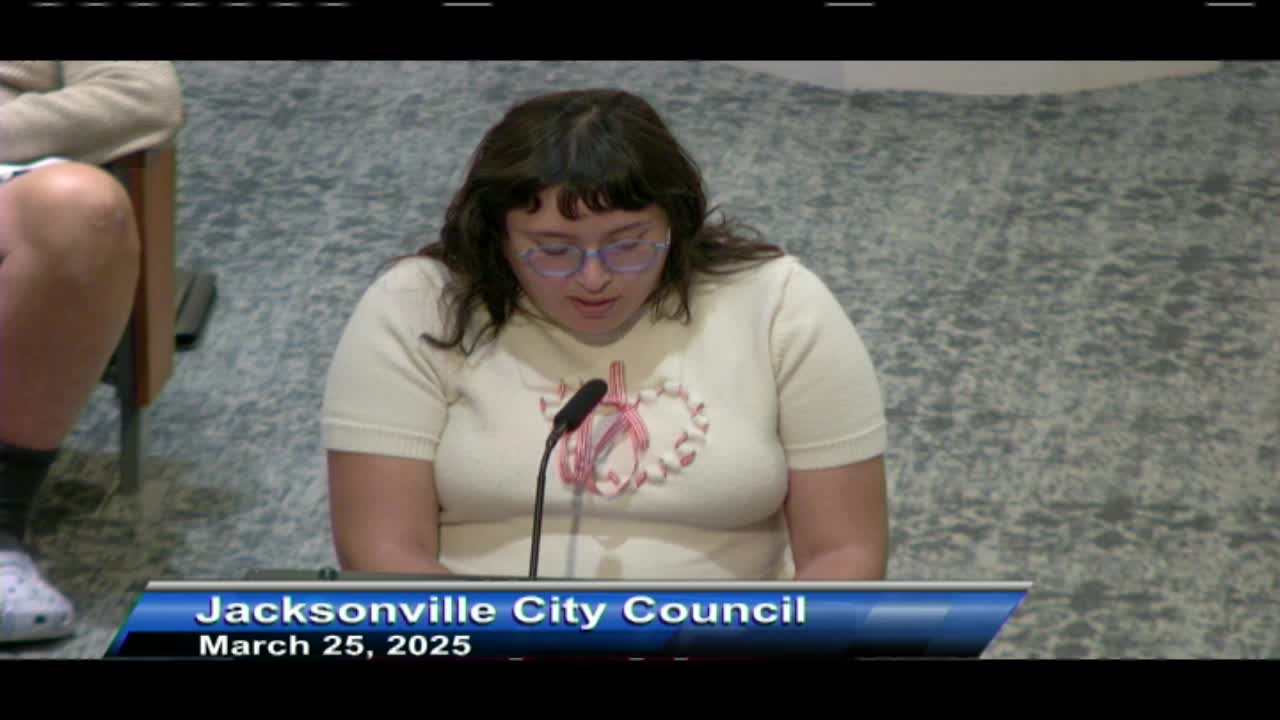
The Jacksonville City Council approved ordinance 20-25-0147 — a measure to fund and equip the Jacksonville Sheriff’s Office with additional mobile fingerprinting devices and related enforcement provisions — after lengthy public comment that split neighborhood groups, immigrant-rights advocates and law-enforcement supporters.
After a series of committee amendments and substitute language adopted on the floor, the council passed the ordinance as amended (final recorded vote: 12 yeas, 5 nays). The bill’s final form narrowed some enforcement language that had drawn constitutional and fiscal concerns while including an appropriation to fund mobile devices.
Opponents, including immigrant-rights coalitions and civil-rights advocates, argued in public comment that the ordinance duplicates state and federal immigration law, risks racial profiling, would discourage victims and witnesses from reporting crimes and invites costly litigation. The ACLU and local community groups urged the council to reject the measure and instead focus resources on community policing and social supports.
Supporters — including several council members and law-enforcement advocates — said the devices help JSO identify people with criminal histories and assist cooperation with state and federal partners. Backers framed the measure as a public-safety tool, argued it targeted people who have already had run-ins with the justice system, and said it was narrowly tailored in the adopted substitute.
The ordinance passed after the chair and members debated funding sources and legal risk. Several council members said they had modified the bill to reduce constitutional exposure and to include reporting requirements and guardrails. The ordinance authorizes funding for the devices and sets guidelines for use; it also contains language requiring cooperation with state or federal immigration enforcement where lawful.
Vote: 12-5 in favor. The measure drew extensive public comment earlier in the meeting and is expected to face legal challenges from civil-rights groups if litigated.