
Candidates stress school safety, law-enforcement partnerships and curriculum oversight in Higley forums
Get AI-powered insights, summaries, and transcripts
Sign Up Free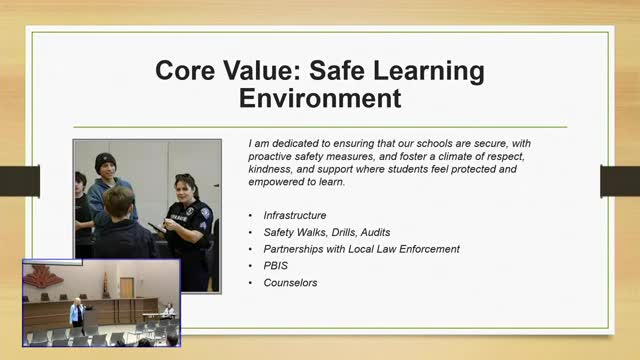
Summary
Finalists emphasized physical-security upgrades, partnerships with local police, curriculum-adoption processes and public review as priorities if selected as superintendent.
Safety and curriculum oversight featured prominently at the Higley Unified superintendent finalist forums as candidates described current measures and proposed next steps.
Dr. Bridal Copeland described a layered approach to safety that included bond-funded physical upgrades (single-entry points, safety glass and buzzer systems), monthly coordination with Mesa Police Department and Queen Creek Police Department, and an educational video about the "power of words" that she said students watch "twice a year" and which she credited with a decline in threat-related discipline incidents. She also noted experience designing career-path high schools where students can graduate with industry certificates.
David Lotzenheiser discussed operational safety measures, citing school-safety grants that supported the placement of SROs/SSOs at secondary campuses, the use of camera systems and pilot programs such as vape detectors; he said technology filters and device-management are part of campus safety in addition to perimeter security. Lotzenheiser also described the district’s planned English curriculum adoption cycle and said public review and stakeholder committees will be part of the process.
Dr. Randy Millerwein said he would prioritize rebuilding transparent relationships with law enforcement and the community, and then review existing policies and standard operating procedures to determine what additional tools might be needed. "I have to earn my title," he said in describing a leadership style that emphasizes humility and collective problem solving. All three finalists said curriculum decisions should follow district policy, include public review and be supported by training to ensure materials are implemented with fidelity in classrooms.
None of the finalists proposed specific new spending levels in the forums; several said future resource decisions would depend on board direction and the district’s fiscal condition. Candidates emphasized that safety and curriculum work would continue to involve site leaders, law-enforcement partners and parent or community advisory groups rather than unilateral decisions from the superintendent’s office.