
Finalists cite enrollment decline and override loss as central fiscal challenges for Higley USD
Get AI-powered insights, summaries, and transcripts
Sign Up Free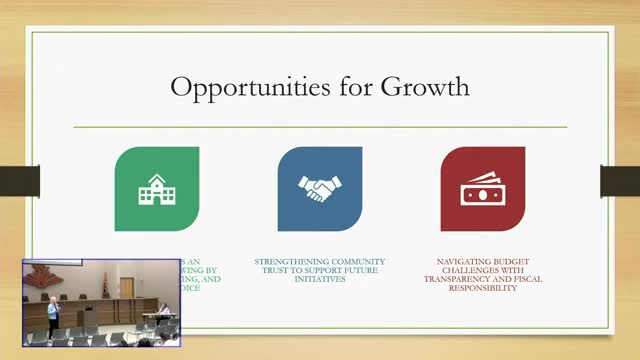
Summary
During public finalist forums, candidates identified declining kindergarten cohorts, a failed override renewal and teacher retention as interrelated fiscal challenges and proposed outreach, storytelling and partnership strategies to address them.
At public finalist forums for Higley Unified School District’s superintendent search, all three finalists said enrollment decline and the district’s recent failed override renewal present near-term fiscal challenges. Several candidates framed those challenges as linked to community perception and teacher retention.
David Lotzenheiser said he would prioritize continuity and community outreach and flagged a specific near-term shortfall: "This year, we are gonna graduate 300 more seniors who are leaving us than we have kindergartners coming in," he said. Dr. Bridal Copeland noted the district recently had an override renewal that did not pass and said she would work with staff and community partners to strategize enrollment and fiscal solutions. Dr. Randy Millerwein called for rebuilding trust and "telling the community what we're doing well," saying public schools must do a better job communicating their programs and results.
Candidates proposed similar responses: increase visible, school-level outreach; leverage events and extracurricular programs to share district success stories; strengthen business and chamber partnerships; and expand career and choice programs that candidates said attract families. Lotzenheiser described a strategy of “one interaction at a time” — encouraging staff and administrators to use every contact with families and community members as an opportunity to share the district’s programs and achievements.
On compensation and retention, candidates said fiscal constraints complicate pay increases but urged nonmonetary supports—strong professional learning communities, mentoring for new teachers and clearer communication about how budget decisions support classrooms. No candidate provided dollar amounts for proposed compensation changes; candidates said precise financial steps would depend on board decisions and available funding.