Get Full Government Meeting Transcripts, Videos, & Alerts Forever!
Get email alerts on the Emergency Preparedness topic
No spam. Unsubscribe anytime.
Cerritos safety manager urges residents to prepare for fires, floods and power disruptions
Summary
Safety manager presented tips on water storage, long‑shelf food, filters and basic medical kits, and answered committee questions about older city-issued water barrels and supply rotation.
Safety Manager Daryl Evans reminded the Cerritos City Safety Committee on Feb. 18 of recent local and regional disasters and urged residents to maintain emergency supplies and readiness.
“Don't wait for the emergency to occur,” Evans said, presenting slides on fires, floods and earthquakes and showing examples of water storage, long‑shelf freeze‑dried food and filters. He described using water stabilizer in 50-gallon drums to keep stored water usable for about five years and recommended storing containers in cool, shaded locations to limit contamination and taste changes.
Evans displayed photos of large water containers and a high-end water filter and noted that freeze-dried meals (he cited Mountain House as an example) can remain stable for up to 25 years. He emphasized medical kits and the likelihood that emergency responders and hospitals will prioritize the most severely injured during a large event.
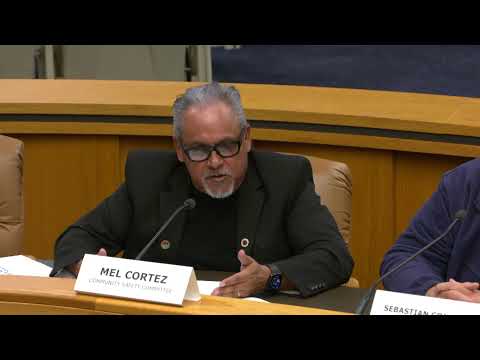
A committee member asked whether an older 50-gallon drum the city previously distributed would still be potable; Evans said he would check with Public Works and report back at the next meeting. He clarified that while water does not “go bad” chemically, stored water can become contaminated without proper stabilizer and storage practices, and he said he refreshes his own stored supply about every five years.
Ending: Evans closed by saying preparedness is most effective before a disaster occurs and offered to answer follow-up questions; staff committed to checking on the status of past city-distributed water barrels and to report back.