Get Full Government Meeting Transcripts, Videos, & Alerts Forever!
Get email alerts on the Open Meetings topic
No spam. Unsubscribe anytime.
Committee tightens language but advances bill limiting off-line coordination among public officials; opponents warn of daisy‑chain loophole
Summary
Senate Bill 376, as amended, restricts disclosure by members who meet in pairs about matters that will come before the governing body; the committee advanced the amended bill after opponents warned it still allows stepwise "daisy‑chain" coordination.
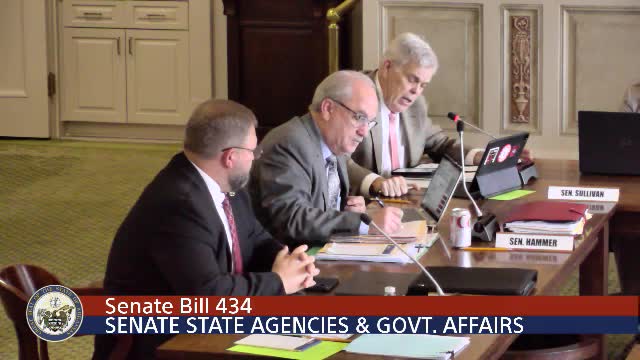
Sen. Clark returned to the committee with Senate Bill 376 as amended; the motion before the committee would restrict disclosure of another member's position in post‑conversation contacts. The amendment narrows language but opponents said it does not close a common problem they call the "daisy chain," in which two members meet and then relay positions individually to other members so that, piecemeal, the full governing body reaches a decision outside a public meeting.
Clark said the amendment was a compromise intended to allow limited two‑person interactions without turning them into secret full‑body deliberations. He said the amendment was intended to reduce litigation over ambiguous case law and to preserve practical discussions among officials. "Two people are not a meeting," Clark said during closing remarks, adding he would side with transparency when officials violate the law.
Opponents urged the committee to adopt a tighter prohibition. Professor Robert Steinbach, who has written about the Freedom of Information Act, and local journalists and advocates recounted cases where officials used sequential one‑on‑one conversations and text threads to reach decisions outside public view. Professor Steinbach and several others recommended language that would bar members who participated in an off‑line discussion from subsequently communicating with any other members about that same matter until the governing body met publicly on it.
After the public record and multiple rounds of questioning, the committee approved the amended bill by voice vote following a motion to pass by Sen. Sullivan and a second by Sen. Peyton. Several opponents warned the amended language still leaves enforcement and litigation as likely outcomes in cases of alleged circumvention. The committee record shows the amendment was adopted before final passage in committee.