Get Full Government Meeting Transcripts, Videos, & Alerts Forever!
Get email alerts on the Ethics Financial Disclosure topic
No spam. Unsubscribe anytime.
Senate committee considers broad rewrite of legislators' financial disclosure form
Summary
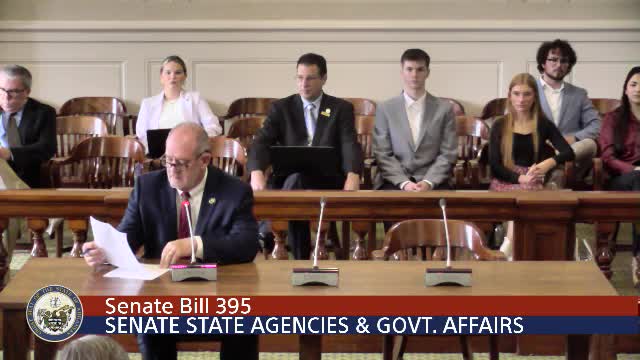
Senator Jimmy Hickey, sponsor of Senate Bill 395, told the State Agencies & Governmental Affairs Committee that his bill would modernize the state's Statement of Financial Interest.
Senator Jimmy Hickey, sponsor of Senate Bill 395, told the State Agencies & Governmental Affairs Committee that his bill would modernize the state's Statement of Financial Interest. "What I'm doing is taking off the $12.05 and if you just have income over a thousand from any source, of course, that'll stay the same," Hickey said, and added the bill would require reporting of investments or holdings held "at any time during the year."
The bill would keep the $1,000 income threshold but remove the smaller $12.50/$12,500 checkbox, expand the definition of reportable investments to list examples such as "stocks, bonds, futures, options, oil and gas interest," permit use of stock ticker symbols rather than full issuer addresses, clarify reporting of retirement-managed accounts, lower an ownership-reporting trigger from 10% to 1% for trusts or businesses, and add a new class A misdemeanor for anyone who uses SFI disclosures to commit a crime against the filer. Hickey said the changes are intended to close gaps he traces to the original initiated act adopted in 1988.
Why it matters: the SFI form is the primary statutory disclosure used to alert the public to potential conflicts of interest among legislators, judges and certain agency officials. Committee members pressed both substance and practical implications — how much detail filers must provide, whether the change would increase transparency or impose excessive burdens, and whether disclosure might expose filers to security risks.
Committee debate focused on several recurring concerns. Senator Dawson warned, "this is not just a simple change. This is a dramatic change, when you're talking about the breadth of what you're trying to do here," and questioned whether the proposal would require listing every asset or short-term transaction. Hickey and several members clarified the bill distinguishes between sources of income (the $1,000 threshold remains) and the separate business/holding disclosures that the sponsor says already require listing individual investments under current law.
Graham Sloan, director of the State Ethics Commission, told the committee how the commission and staff interpret the current law and how the proposed language might be applied. "I do list any bank that I've got more than a thousand dollars in. I don't give the exact amount, but, if I had a savings account at a particular bank, it was worth more than a thousand or even a checking account more than a thousand, I would list that on mine," Sloan said, describing current practice and the commission's role in offering advisory opinions and rulemaking. Sloan also said the commission issues written instructions that accompany the SFI form and that rulemaking or updated instructions could follow statutory change.
Supporters argued the bill updates antiquated provisions and improves clarity for modern financial instruments. Senator Tucker said he favored the bill's broad language for investments, calling the "without limitation" phrase useful because "we just don't know if this had been designed 10 years ago or Bitcoin wouldn't have existed." Opponents and skeptical members flagged privacy and administrative concerns: Senator Clark and others pressed whether listing bank accounts, safety-deposit contents or hobby income would be required and worried that detailed public listings could create security or "gotcha" risks for filers. Several members urged clearer definitions and guidance from the Ethics Commission.
The bill also explicitly preserves the Ethics Commission's investigative authority. Hickey said the draft adds language saying the proposal "does not restrict the power of the ethics commission to conduct an investigation under its jurisdiction."
Outcome and next steps: After extended questioning and discussion the sponsor closed and the committee voted to pass the bill. The transcript does not record a roll-call tally in full; the committee recorded the motion, the second, and a voice vote. The bill now moves forward for additional consideration and likely drafting adjustments; the sponsor indicated willingness to refine language and to work with the Ethics Commission on guidance or form changes.
What to watch: The principal technical issues remaining are (1) whether to retain or update dollar thresholds for disclosure, (2) whether to define "holding" and "investment" in statute or leave it to rules, (3) how to treat retirement-managed accounts and instruments such as options or futures, and (4) the scope and penalty for the proposed criminal prohibition on unlawful use of SFI data.