Get Full Government Meeting Transcripts, Videos, & Alerts Forever!
Get email alerts on the Judicial Elections topic
No spam. Unsubscribe anytime.
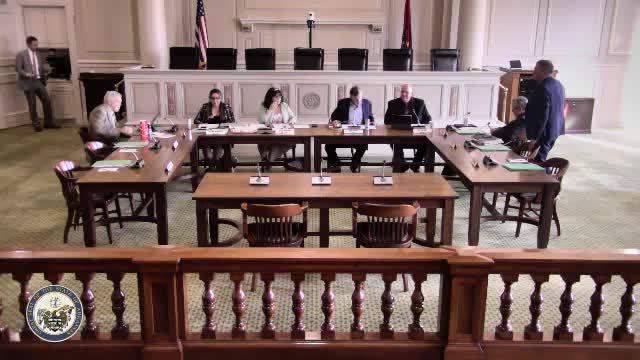
Lawmakers debate SJR 13 proposal to allow partisan judicial races
Summary
State Representative Robin Lundstrom presented Senate Joint Resolution 13, which would permit judges to run with party labels; law professor Josh Silverstein testified against the change, citing research linking partisan judicial elections to more partisan decisionmaking.
State Representative Robin Lundstrom, a sponsor of SJR 13, told the Senate State Agencies & Governmental Affairs Committee that the resolution would let judicial candidates run with party labels so “the voters [would] know exactly what they were voting for.”
The proposal drew a substantive, policy-focused response from Josh Silverstein, a law professor who testified in his individual capacity. Silverstein summarized the debate as a tradeoff between voter information and judicial behavior: “The signature argument in favor of partisan elections is it will provide more information to the voters,” he said. “The signature problem with partisan elections of judges is that the bulk of the empirical research in this area indicates that partisan judges are more likely to ... vote in a partisan way and less likely to carefully follow the letter of the law.”
The committee hearing included extended back-and-forth between Silverstein and multiple senators exploring the empirical evidence. Silverstein cited scholarship — including work by Joanna Shepherd and Michael Kang — finding statistically significant relationships between campaign contributions and judicial decisions in partisan-election systems and said studies show partisan elections attract greater campaign spending and more politically charged advertising. He also said nonpartisan systems tend to prompt more voter inquiry about candidates rather than straight‑party voting.
Committee members pressed Silverstein on the magnitude and variation of the effects across subject areas. He replied that the size of partisan influence varies by matter — larger in cases involving moneyed interests, smaller in routine criminal matters — and that judges are unanimous in the vast majority of cases but are more likely to split along partisan lines in the small subset of contentious cases where ideology matters.
Representative Lundstrom told the committee SJR 13 would restore an earlier practice in state history and “pull back the robe and allow the voters to decide who will sit in judgment over them.” She said judges would still be free to run as independents if they chose not to use a party label.
No vote was taken; the committee simply heard presentations and public testimony. The record shows the debate focused on empirical claims about judicial behavior, tradeoffs between voter information and institutional impartiality, and whether the rule of law is strengthened or weakened by partisan labels.