Get Full Government Meeting Transcripts, Videos, & Alerts Forever!
Get email alerts on the Race And Gender Quotas topic
No spam. Unsubscribe anytime.
Senate committee approves bill to remove race and gender quotas from state boards and commissions
Summary
The Senate State Agencies & Govt'l Affairs Committee voted to pass House Bill 1365, which removes race- and gender-based quotas from 22 statutory provisions governing boards and commissions; backers cited constitutional concerns and recent litigation, while opponents argued quotas ensure voices on unpaid advisory bodies.
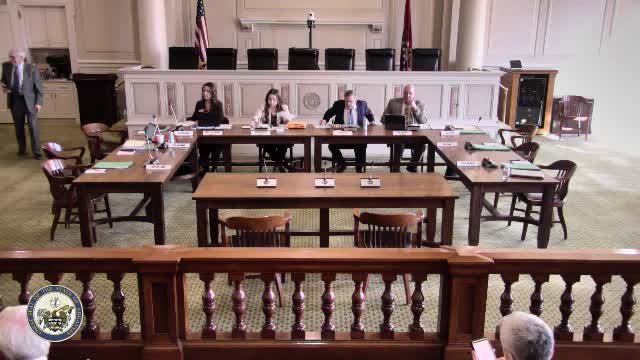
House Bill 1365, which would strike race- and gender-based quotas from roughly 22 statutory provisions governing state boards and commissions, passed the Senate State Agencies & Govt'l Affairs Committee after more than an hour of questions and public comment.
Representative Carolyn Brown, the bill sponsor, told the committee, “House bill 1365 is a very simple bill, to remove race and gender quotas from 22, sections of code.” Brown and supporters said the changes are intended to bring the statutes into compliance with the Fourteenth Amendment and to avoid further litigation. Laura D’Agostino of the Pacific Legal Foundation told senators the provisions could be unconstitutional: “We believe under the, Fourteenth Amendment, this law is unconstitutional,” she said.
Committee discussion focused on implementation and on whether the new law would be retroactive. Senator Sullivan asked whether appointments made under the current law would be immediately invalidated and how the change would be implemented; D’Agostino and Brown said the typical judicial approach is prospective — future appointments would be made without race or gender classifications, but the bill would not remove people already lawfully appointed. Senator Tucker and others pressed on whether other forms of diversity (for example geographic diversity) were affected. Representative Brown and D’Agostino said the bill’s aim was to remove statutory race and gender mandates; they indicated other criteria such as geographic representation could be addressed separately if senators desired.
Testimony included law professor Robert Steinbruck (appearing in his individual capacity), who argued the bill followed recent U.S. Supreme Court guidance on race-conscious policies and would “right a wrong.” Opponents in the committee made the case that statutory quotas ensure representation on unpaid advisory bodies and help bring underrepresented perspectives to policy discussion. Senator Tucker said he would vote no, arguing that the quotas ensured “everyone has a voice” on boards and commissions.
After closing remarks from the sponsor — “these race and gender quotas are unconstitutional” — the committee took a motion to pass. Senator Payton moved to pass, Senator Sullivan seconded. The committee recorded a voice vote with ayes and opposed; the chair declared the bill passed by the committee.
What the bill does not do: it does not add an emergency clause, and sponsors said it does not itself remove incumbents who were appointed under prior law. Implementation questions raised in committee focused on how future appointments would be handled and whether other statutory selection criteria (for example geographic representation) should be retained or changed.
The bill now advances from committee as passed. Further action and potential changes in subsequent chambers could affect specific drafting (sponsors offered to work with drafters on language such as geographic criteria).