Get Full Government Meeting Transcripts, Videos, & Alerts Forever!
Get email alerts on the Public Health Vaping Registry topic
No spam. Unsubscribe anytime.
Senate committee advances vapor-product registry bill as retailers, public-health advocates clash
Summary
A Senate committee heard hours of testimony on a proposed registry for vapor products, with small vape shop owners warning the measure would shutter businesses if it ties market access to FDA approvals, while retailers and a member of the state Tobacco Control Board argued a registry would help enforcement against illicit products.
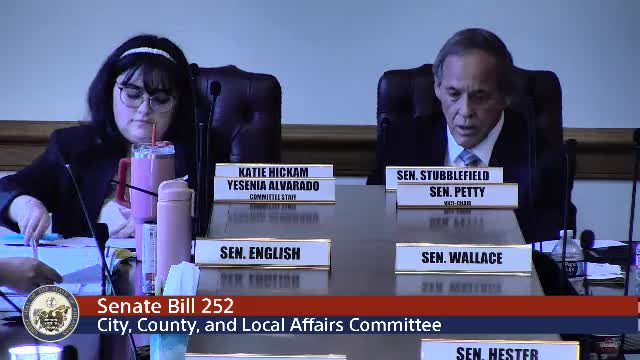
Lawmakers in the Senate City, County & Local Affairs Committee moved a vapor-product registry bill forward after extended testimony from small retailers, trade groups, enforcement officials and consumers about public-health risks and the bill's compliance burdens.
Multiple small-business owners told the committee they would be unable to comply with the bill's requirement that products be on a registry tied to FDA approvals or pending FDA applications, saying many small manufacturers received denials from the FDA and could therefore be excluded. "This bill will indeed put me out of business," said Scout Stubbs of Drippers Vape Shop, who said many independent manufacturers received blanket denials from federal review and that the bill's emergency clause would make inventory illegal immediately.
Industry and retail groups supported the registry concept. Steve Good of the Arkansas Retailers Association said a central directory would help store owners determine which products are legal to buy and sell: "When they are presented with products ... our store managers and owners don't know what ... are legal or illegal. That's why we think it's a very good idea to have a registry." David Hendricks, a retail owner who also serves on the Arkansas Tobacco Control Board, told the committee he supports a registry to help enforcement agents and level the playing field for compliant retailers.
Witnesses disputed data about business closures following registry laws in other states. Stubbs provided a letter she said documented closures in Alabama, Louisiana and Oklahoma; Steve Good told the committee his contacts in Alabama reported no closures. The committee's exchange reflected competing accounts and uncertainty over enforcement costs: witnesses said Oklahoma budgeted millions for enforcement in its first year.
Public-health and consumer witnesses urged different approaches. Rachel Steele, a resident and former vape-industry employee, urged the committee not to treat all vape products the same and said many specialty vape shops help customers reduce nicotine intake. Regulators and retailers discussed alternatives such as a banned-products list, state-level testing, or a phased transition; several committee members signaled interest in removing or separate-voting an emergency clause to give businesses time to adapt.
Sen. Jonathan Dismang, speaking for the bill, said he would ask for a separate vote on the emergency clause if the bill advances from committee, with the intention of not passing the immediate-effect provision to allow time for compliance. The committee recorded a motion to pass; members debated but ultimately advanced the measure to the floor with amendments and further work expected.