Get Full Government Meeting Transcripts, Videos, & Alerts Forever!
Get email alerts on the Solicitation Chiropractors topic
No spam. Unsubscribe anytime.
Senate committee passes bill banning immediate post-crash outreach by chiropractors after heated testimony
Summary
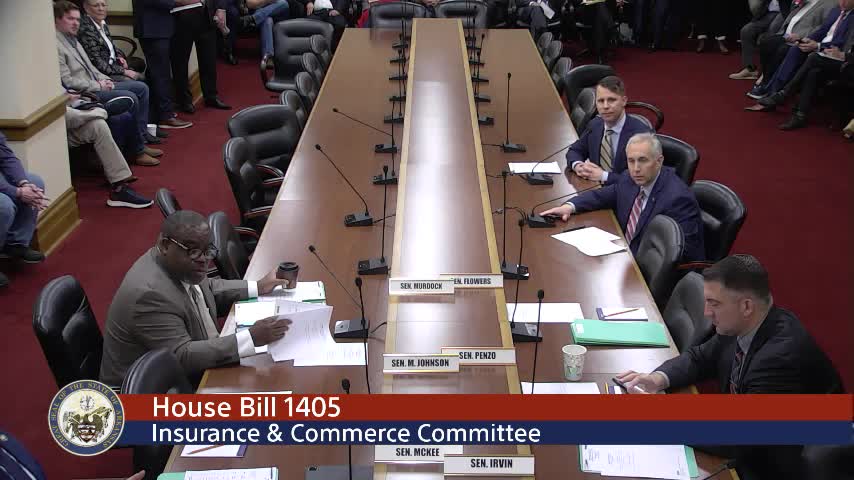
The Senate Insurance & Commerce Committee on Monday passed House Bill 1405, which bars chiropractors and chiropractic solicitors from directly contacting crash victims for 14 days after an accident.
The Senate Insurance & Commerce Committee on Monday passed House Bill 1405, a measure that imposes a 14-day ban on direct outreach by chiropractors or chiropractic “runners” to people involved in collisions or other catastrophes.
The bill’s sponsor in the Senate, Sen. Justin Boyd, said the 14-day cooling-off period is intended to protect people at their most vulnerable immediately after a crash. "I would be upset if someone showed up on my front porch ... telling my wife that, hey, you gotta get down to the company doctor right now," Boyd said during closing remarks.
Proponents, led at the hearing by Fort Smith attorney William Buckley, said the bill targets aggressive advertising and deceptive practices they said persist in parts of the state. Buckley told the committee that runners sometimes assure crash victims they will not be charged or that the runner can negotiate with an insurer, and that the bill will give victims time to consult trusted advisors.
Opponents, including chiropractors and trade groups, urged the committee to reject or amend the measure. Chris Cathy, a chiropractor practicing in Arkansas for 28 years, said prior state laws and board rules already reduced solicitation complaints dramatically (from about 50 per year historically to only a few in recent years). "The rules and laws in place are working," Cathy told the committee, adding that the bill unfairly singles out chiropractors while not applying to other health-care providers.
Dr. Michael Courtney, chairman of the Arkansas Chiropractic Society, said in written testimony and at the hearing that prior court rulings raised constitutional issues for broadly written restrictions. He and other witnesses warned the bill could be challenged in court if it treats one profession differently from others.
Kevin O'Dwyer, an attorney representing chiropractic clinics, said procurers undergo training and that complaints have fallen. Don Tilton, a longtime contract lobbyist, called the bill "anti-competitive" and urged a more targeted, investigatory approach, arguing the legislature should not impose a one-size-fits-all restriction on an entire profession.
Supporters disputed the claim that the bill would be unconstitutional as written. Buckley and other proponents said the bill was drafted to avoid prior pitfalls the Arkansas Supreme Court identified by specifying a time-limited restriction and limiting the class of people affected to accident victims.
After extended public testimony and questions from senators, the committee adopted an amendment that added Sen. Justin Boyd as a Senate sponsor and then voted to pass the bill. Motion to pass was offered by Sen. Boyd and seconded by Sen. Murdoch; the committee chair called for the ayes and the bill passed.
The bill language is permissive (it allows a judge or regulator to pursue enforcement rather than imposing an automatic civil penalty), and committee witnesses debated whether existing chiropractic-board rules, earlier state acts, and criminal penalties already address the conduct HB1405 targets.
The committee did not record a roll-call tally in the hearing transcript; the motion to pass was adopted on voice vote.
Proponents said HB1405 aims to curb misleading contacts and protect crash victims; opponents said the measure is overly broad, risks singling out one profession, and could raise constitutional issues or competitive distortions. The transcript shows extensive back-and-forth on whether prior acts (including an Act in 2013 and enforcement actions since 2019) already reduced complaints significantly and whether broader regulation of other medical providers is needed instead of a chiropractor-specific prohibition.
The bill now advances in the legislative process.