Get Full Government Meeting Transcripts, Videos, & Alerts Forever!
Get email alerts on the Municipal Budget topic
No spam. Unsubscribe anytime.
Finance committee reviews restricted funds, refuse costs and $2.1M city-hall ADA plan
Summary
Rolling Hills Estates finance committee discussed restrictions on transportation sales-tax funds, a $165,000 COPS allocation, rising refuse contract costs and options to finance a proposed $2.1 million ADA upgrade to city hall, with decisions deferred to the full council in June.
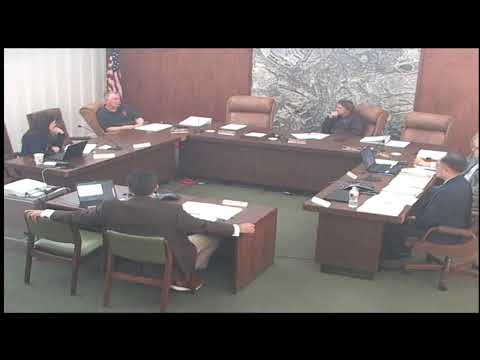
At a regularly scheduled meeting of the Rolling Hills Estates Finance Budget Committee, members and staff reviewed the city’s restricted “other funds,” examined rising refuse contract costs and discussed financing options for a proposed $2.1 million Americans with Disabilities Act (ADA) improvement to city hall and a proposed $250,000 battery/solar backup.
The discussion centered on how sales-tax–derived transportation funds (Prop A, Prop C and subsequent measures) and other restricted revenue streams may be used, how the city should respond to higher refuse contract costs, and whether to borrow for large capital projects or fund them from reserves. Staff emphasized that final budget decisions will be made by the full City Council in June.
Finance staff described the transportation-related funds as derived from a series of sales-tax measures enacted over several decades and said those funds have become less restrictive over time, allowing spending on roads, sidewalks and pedestrian amenities. Staff told the committee the city typically exchanges restricted transportation funds for unrestricted revenues “and we pay 80¢ on the dollar,” and later noted there is recent outside interest in an exchange at about “75¢ on the dollar.” Staff also said the sales-tax funds are expected to grow roughly 3% next year.
On public-safety allocations, staff said the city’s COPS fund — described as a county supplemental law-enforcement fund that is distributed from state vehicle-license fee increases enacted in 2009 — is expected to provide about $165,000 next year and that the amount is likely to remain flat because it is tied to vehicle license fees.
The refuse fund drew detailed attention. Staff said account 815, the refuse service contract line, is expected to total about $944,000 this year; staff added that the contractor indicated a CPI adjustment of 3.9% and that the contract with Republic would increase “from $9.44 to $9.81.” Staff also said the city pays approximately $24,000 a year to the general fund for overhead related to refuse service. Taken together, staff said the refuse program will require roughly $1.5 million in revenue this year and that the committee must choose between covering that amount entirely through service charges or using a general-fund subsidy. Staff noted a potential shortfall of about $250,000 if parcel charges remain at the current $1,100 per parcel level.
On capital projects, committee members reviewed a proposed $2.1 million package of ADA improvements tied to city-hall work and a separate proposed $250,000 battery/solar backup project. Staff said the battery/solar backup would be one-time spending proposed to come from general-fund reserves, while the larger ADA project would not be funded from reserves because the city does not currently have $2.1 million available in reserves.
Staff presented borrowing as an option, saying the city previously applied for and received a $300,000 loan through a California Joint Powers Insurance Authority loan program and that the city could apply for additional financing to cover the balance of the ADA estimate. Staff said the loan program requires volunteers to serve on a review panel before applications are processed and that the city could be required to reinitiate the review group to secure new financing.
Council members expressed caution about borrowing because market interest rates have risen. Council Member Black asked, “Is this thing gonna be at 6 and a half, 7% like everybody else’s, right?” and several council members said they were reluctant to lock in higher rates if the city can use reserves instead. Staff described the loan’s earlier preliminary terms from 2020 as an interest estimate of 1.91% plus 50 basis points for a fixed rate for financings in a particular program year, but warned that the authority reserves the right to adjust rates annually and that current market rates are likely higher than the earlier estimate.
Committee members also discussed budget carryovers and ongoing projects. Staff reminded the group that appropriations for started projects — especially those with grant or FEMA funding — generally carry over year to year until the project is completed or the council chooses to cancel it. The committee noted a $300,000 appropriation for an outdoor warning siren that remains in the budget but has not been approved to proceed; staff said the council can remove projects that have not started. Measure W funding rules were also discussed: staff explained Measure W is split so that 30% of receipts may be used for permit-compliance or existing measures and 70% must go to new projects; staff said the 70% share has been used in part to cover Sepulveda-monitoring permit conditions and that the remainder may be available for other approved new projects, but that Measure W funds generally cannot be used for routine storm-drain maintenance unless the work has a clean-water/permitting component.
No formal votes were taken at the committee meeting. Staff will prepare the council agenda packet for the full City Council and return with updated numbers and loan-rate information; the council is scheduled to make final budget decisions in June. Committee members said they would consider removing the $2.1 million ADA estimate from next year’s work plan if they prefer to present only projects the city is certain will proceed.
The meeting closed with staff confirming there was no public comment and the committee adjourning.