Get Full Government Meeting Transcripts, Videos, & Alerts Forever!
Get email alerts on the Refuse Billing topic
No spam. Unsubscribe anytime.
Rolling Hills Estates committee backs policy-first approach to inconsistent refuse billing
Summary
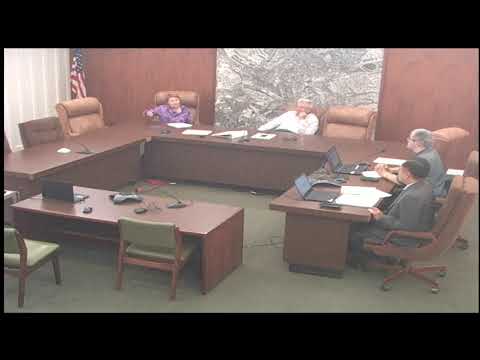
The Solaris Committee of Rolling Hills Estates moved to recommend a policy-based fix to inconsistent refuse billing that city staff said has reduced refuse-fund revenues since fiscal 2020.
The Solaris Committee of Rolling Hills Estates moved to recommend a policy-based fix to inconsistent refuse billing that city staff said has reduced refuse-fund revenues since fiscal 2020.
City staff member Robert told the committee that a shift in spring 2020 toward visually auditing routes to identify temporarily unserved parcels produced inconsistent annual billing and, by his review, left about 15 parcels that have never been billed. "Starting in fiscal 2020 there was a decline in the number of parcels that were billed because of this," Robert said, adding that the city lacks customer-account data and that Republic Services' compensation is paid on an averaged parcel count rather than per-stop billing.
The committee's direction: ask staff to draft a policy that (1) resumes annual billing for developed parcels even if they are temporarily unoccupied or under construction, (2) treats truly undeveloped/vacant parcels as a separate category with an opt-in if owners want service, (3) not pursue an ordinance now, and (4) send notices to property owners of identified undeveloped parcels and present the draft policy to full council (a blue-folder item) for review. Committee members said the policy can be revised later if enforcement or equity problems emerge.
Why it matters
Committee members said the inconsistent billing has contributed to a growing shortfall in the city's refuse fund that has been covered by the general fund. Robert estimated that adopting either a policy or an ordinance to capture parcels currently presumed temporarily out of service would increase annual revenue by roughly $25,000'$40,000, but that amount is far short of the roughly $200,000 per year in general-fund subsidy the committee discussed. Staff and members warned that, without further rate changes, the city would still need to raise the annual per-parcel assessment from the current figure discussed in the meeting ("about $1,100") to roughly $1,300'$1,400 to fully cover contracted costs.
Details of the staff analysis
Robert said the city has relied on a route-audit method performed by Republic Services in spring each year, when drivers visually mark parcels they judged not to be receiving service and those parcels were excluded from the next fiscal year's tax assessment. Robert described that process as arbitrary because construction and occupancy change throughout the year: "They would try to make a visual determination of who is receiving services and who is not, on a temporary basis," he said.
He told the committee he found 15 parcels with no billing history dating back to the 2019'2020 period; some appear to be legitimately vacant but others lacked documentation explaining why they were never billed. He also said Republic's contract compensation was calculated on an averaged parcel basis (discussed in the meeting as roughly the equivalent of 6.85 or similar unit in the contract language) and then escalated annually by CPI, so Republic receives a fixed, increasing payment while the city's billed parcel count has varied.
Policy vs. ordinance
Robert outlined two options: a policy that sets internal billing rules (including automatically billing developed parcels and treating presumed temporary suspension of service as billable) and an ordinance that would mandate use of city refuse service, allow exemptions only with proof (for example, waste-tickets showing self-haul or private hauler service), and carry enforcement mechanisms. He said an ordinance places the burden of proof on property owners to demonstrate they do not need service. "You have to come to us and tell us why we shouldn't be billed," Robert said when describing the ordinance approach.
Committee members favored the policy approach as quicker to implement and easier to revise. Mayor Pro Tem Mersh said she was "all in favor of having a policy so that staff understands and our residents understand who is being billed for things." Several members expressed concern that an ordinance would be more politically and administratively costly and would require ongoing enforcement staff time.
What the policy will say (committee direction)
- Developed parcels (parcels with a structure) will be billed annually even if temporarily unoccupied or under construction. Committee members said any individual appeals would be handled case-by-case but they did not support categorical exemptions for developed parcels.
- Undeveloped/vacant parcels will not be billed by default but owners will be notified and given the option to opt in to receive service and be billed at the prevailing assessment.
- Notices will be sent to identified vacant/undeveloped parcels and staff will inform Republic Services of parcels the city intends not to have serviced.
- Staff will prepare a blue-folder item for the full council with the proposed policy and background information about revenue impacts, equity considerations and implementation steps.
Other operational points raised
Committee members and staff noted operational limits: residents own their own containers (Robert confirmed Republic does not supply most containers) and the city does not maintain individual customer accounts with Republic; the annual tax-collection mechanism prorates assessments on sale but the city's current system lacks a simple per-account billing record. Staff cautioned that monitoring whether an owner who is not billed is nevertheless using services will be difficult without additional enforcement resources.
What the committee did not do
The committee did not adopt an ordinance or vote on any fee increase. Members discussed but did not decide a specific new rate; several members said they did not want to start a rate-increase discussion in committee and preferred to bring a clear policy recommendation to council first.
Next steps and follow-up
Staff was asked to draft the policy language, identify the undeveloped parcels for targeted notice, define the opt-in and appeals process to the extent practicable, and place the policy proposal in the council's blue-folder packet for the next meeting. The committee agreed the policy route is reversible and can be replaced by an ordinance later if evidence shows that unlawful bin-sharing, illegal disposal, or other compliance issues require stronger enforcement.
Ending
Committee members characterized the recommendation as an operational fix to achieve consistent, equitable billing and to stabilize the refuse fund, while reserving the option to pursue an ordinance if compliance or public-health concerns arise later. "If it's not working and we still see issues with some of the more public-health or equity issues, we can kind of consider an ordinance approach later on," Robert said.