Get Full Government Meeting Transcripts, Videos, & Alerts Forever!
Get email alerts on the City Budget topic
No spam. Unsubscribe anytime.
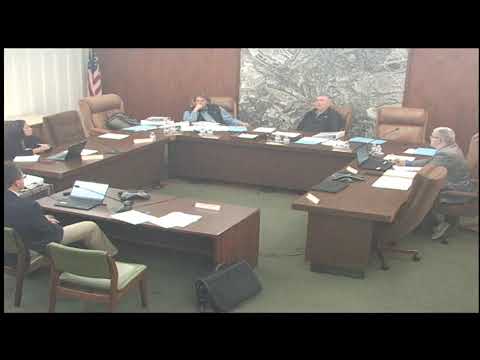
Rolling Hills Estates staff present conservative preliminary budget; refuse rates, insurance and legal costs flagged for follow-up
Summary
City staff presented preliminary revenue and expenditure projections showing a modest structural balance, a $48,000 turf-removal grant and several areas needing further council direction: refuse rates, insurance renewals through the joint-powers authority, and unbudgeted legal costs tied to landslide/CPUC matters.
Robert Samario, a staff presenter, told the Rolling Hills Estates council/finance committee that preliminary projections for next fiscal year show the city roughly structurally balanced but that several external factors will require monitoring and possible council direction.
"I think the only thing that would be of any concern ... is the refuse side of things," Samario said, flagging an upcoming decision on contractor rate changes as a near-term item. He told the committee he expects property-tax growth of about 4% for next year, and that he based revenue projections on mid-year results and recent trends.
The presentation covered key revenue assumptions: property taxes (more than half of the general fund), an assumed 4% increase next year (Samario said he had used 4.75% for the current year), a projected real-property transfer tax of roughly $60,000 for the year (the meeting noted $30,000 year-to-date), and an adjustable building-permit revenue estimate of $450,000 for the next fiscal year based on several projects in the pipeline.
Samario said the city received a $48,000 grant for turf removal and irrigation work that was not previously budgeted. He also discussed salary and benefits assumptions tied to the city's memorandum of understanding (MOU): a required 3.5% cost-of-living adjustment and a 1.5% merit component baked into next year’s expenditure projections.
On expenditures, Samario recommended modest adjustments rather than wholesale line-item decisions at this stage. Staff proposed increasing the city manager’s legal budget by $15,000 to cover extraordinary legal work tied to landslide matters and related filings with the California Public Utilities Commission (CPUC). Samario described the city’s practice of handling routine counsel work under a retainer, with out‑of‑retainer matters charged separately.
Committee members raised insurance costs and renewals under the California Joint Powers Authority (JPA) as a major uncertainty. Committee discussion referenced recent steep premium increases on some properties and the pending JPA renewal: "When we start looking at renewals...we might want to increase the budget for JPA," Samario said. He advised waiting for the renewal figures, then plugging that number into next year’s budget; staff also recommended assuming a healthy percentage increase (e.g., double-digit) for planning purposes.
Councilmembers discussed the city-attorney budget line. The committee agreed to increase the city‑attorney allocation from the current budgeted level to $90,000 next year to reduce risk of shortfalls, citing recent and potential legal activity and associated staffing/time demands.
Samario outlined the city's overall fiscal picture: an adopted budget around $2.6 million with a preliminary projection showing revenue and expenditure changes that could result in a modest surplus (Samario cited about $115,000 higher than adopted budget on revenues alone and noted an earlier summary range of $200,000–$300,000 when revenues and expenditures are combined). He said mid‑year savings from vacancies and other timing issues could increase operating reserves; he estimated the city could add roughly $660,000 to reserves on an operating basis before capital needs are applied.
The committee discussed several specific capital and one‑time items. The city has set aside just under $300,000 for the tennis-court/path project and expects association contributions and additional funding will be required; committee members cautioned the final cost could be substantially higher than current estimates. Staff said no major new capital projects were yet proposed for next year and that such items would be addressed later in the budget process.
On refuse services, Samario said the refuse contractor has requested a rate increase and that, under state law governing property-related rate notices, the city must provide formal notice to ratepayers (staff referenced the requirements of California Proposition 218). The committee must decide within the next couple of months whether to pass the increase through to ratepayers or subsidize it from the refuse or general fund; Samario said staff will return with options and a recommended notice schedule.
The council/committee agreed to receive the preliminary materials on file. A motion to receive the presentation on file was moved and seconded; the motion was approved by voice vote during the meeting (individual roll-call votes were not recorded in the transcript). Samario said staff will return with updated revenue numbers and more final expenditure recommendations at the April 28 meeting and again to the full council in two weeks.
The discussion closed with staff and council agreeing on follow-up items: obtain final JPA renewal figures, refine building-permit estimates as pipeline projects resolve, present specific refuse-rate options and notice language tied to Proposition 218, and finalize line‑by‑line expenditure details ahead of the April budget decisions.