Get Full Government Meeting Transcripts, Videos, & Alerts Forever!
Get email alerts on the Emergency Preparedness topic
No spam. Unsubscribe anytime.
Hemet officials review emergency operations center roles and next steps for readiness
Summary
Fire, city manager and city attorney briefed council on Emergency Operations Center responsibilities, decision-making roles during incidents and continuity-of-government considerations; staff proposed further training, public-information planning and designation of council successors for emergency continuity.
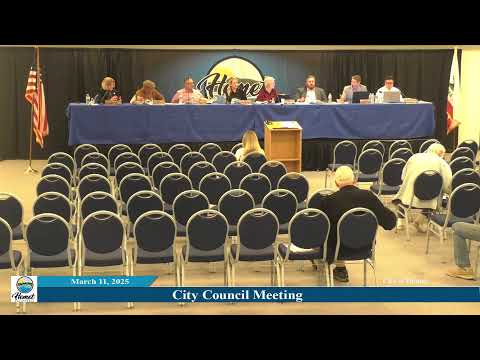
Hemet city staff briefed the City Council on the function of an Emergency Operations Center (EOC) and the respective roles of city officials, emergency management staff and partner agencies during an incident at the March 11 meeting.
Fire Chief (Chief Sowell) described the EOC as the city’s central command and control facility for major incidents and outlined key responsibilities including information gathering, resource management, communications, and operational coordination with regional mutual-aid partners. The chief also described the typical EOC organization: an EOC director, operations, planning, logistics and finance sections, and a public information officer to coordinate media messaging.
City Attorney Stephen Graham Pacifico reviewed legal and procedural aspects of emergency governance. He confirmed the city manager serves as the director of emergency services with expanded purchasing and contracting authority during a declared emergency, subject to later reporting to the council. Pacifico also noted the council may be called on to make policy decisions, approve emergency appropriations, or ratify rules the city manager issues during an emergency.
Continuity and successors
Pacifico told the council the city currently lacks designated disaster successors for the council which state law allows and staff recommended bringing forward a formal succession policy at a future meeting. He suggested options such as using planning commissioners or other designated residents as interim successors if a disaster prevented councilmembers from assembling.
Public information and community resources
Staff said emergency public information would be coordinated through the mayor as the city’s spokesperson, supported by the city PIO, with regular situation updates during prolonged incidents; staff also noted a revised “media in disaster areas” policy is in the works following recent meetings with local media representatives to address credentialing and access concerns.
Council members asked about community resource centers and power outages. The city manager said staff will work to identify appropriate locations and redundancies for community resource or resilience centers (charging stations, basic services) and to coordinate with utility providers and nonprofit partners to support residents during outages.
Next steps: staff proposed additional council briefings, tabletop exercises and a full EOC exercise so council and staff can practice roles, decision points and public communications in a simulated incident. The council received the report and asked staff to return with concrete plans for exercises and a proposed succession list for emergency continuity.