Citizen Portal
Sign In

Hemet council approves $1.4 million plan for 2025 CDBG allocations; narrows public-service pool

2836394 · February 26, 2025

Loading...

AI-Generated Content: All content on this page was generated by AI to highlight key points from the meeting. For complete details and context, we recommend watching the full video. so we can fix them.

Summary

The Hemet City Council approved allocations for the 2025 Community Development Block Grant program, using an estimated HUD allocation and about $544,700 in carryover to fund housing, economic development and nonprofit public services, while noting limits on the public‑services category.

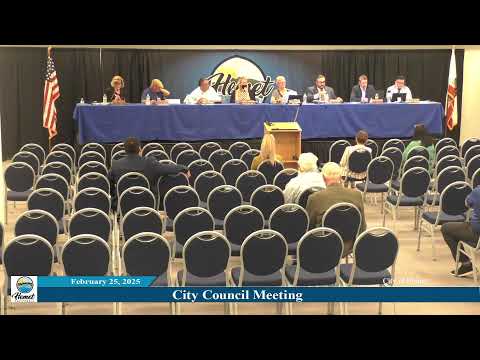
The Hemet City Council voted 5–0 on Feb. 25 to approve staff-recommended allocations for the 2025 program year of the Community Development Block Grant (CDBG) program, using an estimated HUD allocation and a sizable carryover from prior years.

Accounting Manager Kalina Beasley, the staff presenter, told the council the city is using an assumed HUD allocation of $885,000 for program year 2025 and has $544,700 in rollover funds, giving roughly $1.4 million available for next year’s projects. "For this year, we have we received 26 applications for the next program year, 2025, which starts 07/01/2025," Beasley said during the presentation.

The council-approved plan follows federal CDBG rules and the local ad hoc committee’s recommendations. Under HUD rules cited by staff, up to 20% of the current-year allocation may be used for administration and up to 15% for public services; the remainder may be used for housing, public facilities or economic development. Beasley outlined the staff calculation that up to about $177,000 could be used for administration and up to about $132,700 for public services from the estimated allocation.

Why it matters: CDBG funding targets projects that principally benefit low- and moderate-income residents. Council discussion focused on how to distribute limited public-service dollars among a large number of nonprofit requests, how to use rollover funds for housing and capital projects, and how the city could use general-fund nonprofit-grant dollars to fill urgent gaps.

Council debate and staff clarifications

Beasley said the rollover balance is unusually large this year because several prior projects were canceled or returned to the holding account after HUD audits and project changes. She described the largest single proposed use of rollover funds as the Senior and ADA Home Rehabilitation program administered by the Community Development Department. That program was recommended for roughly $570,000, which Beasley said would fund about 57 applicants at an average of $10,000 per household, reducing a multi‑year waiting list.

Councilmember Veil asked whether the Valley Community Pantry could receive an additional $9,400 after it had not applied; Veil said the pantry serves seniors and veterans and that the amount would be meaningful to that group. The city manager replied that the council previously appropriated $100,000 in general‑fund nonprofit grant money, and that the city could, with council direction, consider using general-fund dollars to support community organizations outside the CDBG public-service cap. "With your direction we can allocate general fund dollars toward additional needs within the community," the city manager said.

Councilmember Krupa asked for clearer line-item descriptions for organizations that the council was less familiar with; staff said they would add detail to the staff report. Councilmember Kendrick confirmed she did not participate in the review of the Bill Gray Park accessibility project because it is near her home and noted the process had prioritized youth programs and increased senior home repair funding.

Public comment tied to item

Sharon Morris of Voices for Children, the Riverside County CASA program, addressed the council during the item and thanked the city for CDBG funding that supports court-appointed special advocate volunteers. "It costs Voices for Children $2,000 to support a CASA volunteer for a year," Morris said, and she noted that 76 children from Hemet had been served this fiscal year and 41 were on a waitlist.

Formal action

Councilmember Mayles moved to approve the CDBG allocations as recommended by staff and the ad hoc committee; Council member Krupa seconded. The council voted by roll call: Council member Krupa — yes; Council member Lodge — yes; Council member Mayles — yes; Mayor Pro Tem Kendrick — yes; Mayor Peterson — yes. The motion passed 5–0.

What was approved and next steps

The approved plan funds 14 public-service awards split to prioritize youth programming and organizations with fewer other funding sources, funds multiple economic-development and housing projects (including the Senior/ADA rehabilitation program and small-business facade/entrepreneurship grants), and covers the administration and Fair Housing obligations. Staff noted the HUD allocation is not final; the city will reallocate if HUD’s eventual formula differs from the estimate and will bring the annual action plan back for public comment ahead of a May 15 HUD deadline.

Ending

Councilmembers asked staff to add more detail about specific nonprofit activities in the staff report before the April 22 meeting when the consolidated plan and action plan will be considered for final submission to HUD. The council also asked staff to return options for using the city’s separate general‑fund nonprofit grant appropriation to address urgent, small-dollar needs such as the Valley Community Pantry or additional library security if the council so directs.