Get Full Government Meeting Transcripts, Videos, & Alerts Forever!
Get email alerts on the Budget 2025 26 topic
No spam. Unsubscribe anytime.
Hemet staff previews FY 2025–26 budget: $14.5 million preliminary gap, pensions and insurance cited as drivers
Summary
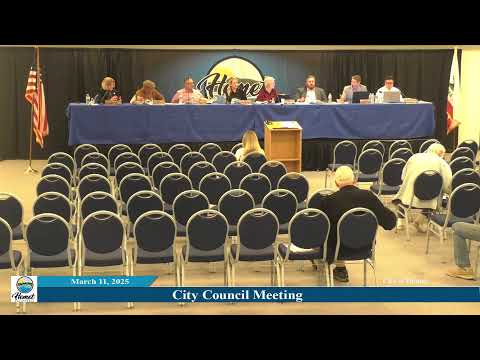
At a March 11 workshop staff presented a draft FY 2025–26 general fund budget showing an initial $14.5 million shortfall driven largely by rising insurance premiums, pension costs and the restoration of vacancy factors; council directed conservative revenue assumptions and further review.
City staff presented the draft fiscal year 2025–26 general fund budget to the Hemet City Council on March 11, showing an initial projected deficit of about $14.5 million and identifying liability insurance premiums and CalPERS pension obligations as principal cost drivers.
Administrative Services Director Tiffany Barnett walked the council through revenue and expenditure projections, a breakdown of Measure U allocations, and multi-year pension modeling using actuarial scenarios. Staff said the draft general fund revenue projection is $80.6 million and preliminary operating expenditures total roughly $95.1 million, yielding the $14.5 million gap.
Key cost drivers and context
- Insurance and liability: Barnett said the city faces sharply higher liability insurance premiums and that the budget includes moving $3.2 million previously payable from one-time fund balance into ongoing operating costs plus an anticipated premium increase, producing roughly $5.0 million of added obligations for 2025–26.
- Pension and OPEB: Staff presented long-range pension scenarios from a pension-modeling tool and noted CalPERS’ discount-rate and investment-return assumptions materially affect long-term obligations. Under one scenario a lower discount rate could add millions to annual employer costs in future years.
- Vacancy factor and salary changes: The draft restores a vacancy factor removed from the current year’s budget and includes step increases and cost-of-living adjustments that add to the spending baseline.
- Internal service charges: Higher technical and fleet costs for central service funds (IT, facilities, vehicle maintenance) are reflected as department overhead increases.
Revenues and reserves
Barnett recommended conservative revenue assumptions. Staff modeled a modest uplift if the council chose HDL’s higher sales-tax and property-tax estimates; using HDL would reduce the gap by about $900,000. Council members generally favored a conservative approach given national economic uncertainty and the city’s recent growth in cash and investment balances.
The presentation also noted strong investment returns this fiscal year, with the city holding roughly $180 million in cash and investments at December and earning an average yield near 4%. Staff emphasized those are volatile one-time gains and advised caution about relying on investment earnings as ongoing revenue.
Next steps
Staff outlined a schedule of additional budget workshops, a strategic planning session the council scheduled for March 14, and potential options for closing the gap, including reintroducing vacancy factors, reducing one-time items or deferring the general plan update to other funding sources. The council received the presentation and asked staff to continue refining assumptions and return with proposals and follow-up materials for the next workshop cycle.