
Insurance and Real Estate Committee advances bill to require coverage for biomarker testing
Get AI-powered insights, summaries, and transcripts
Sign Up Free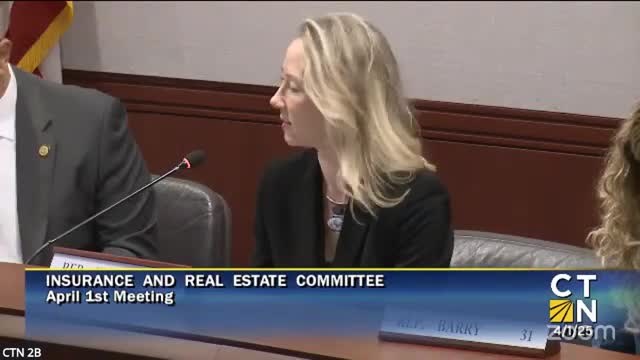
Summary
The Insurance and Real Estate Committee voted April 1, 2025, to send JF HB 6771 — an act requiring health insurance coverage for biomarker testing — to the House floor after debate over cost, scope and safeguards.
The Insurance and Real Estate Committee voted April 1, 2025, to send JF HB 6771 — an act requiring health insurance coverage for biomarker testing — to the House floor after debate over cost, scope and safeguards.
Committee members said the bill, referred from the Aging Committee, would expand coverage for biomarker tests, including whole‑genome sequencing. Committee staff told members the Insurance Department’s estimated cost for a related study is $65,000 to $80,000, with coverage costs of less than $100,000 in fiscal 2026 and under $200,000 in fiscal 2027; the general fund impact was estimated up to $92,000 in fiscal 2026 and about $184,000 in fiscal 2027. The Department of Social Services also showed additional, unspecified costs.
The bill’s proponents said the measure is intended to expand access to diagnostic tests that can detect rare and serious conditions earlier. Senator Wong, a mover of the motion, described biomarkers as “truly, remarkable and and potentially life saving and particularly on the rare disease issue,” and urged continued negotiation on cost and implementation while supporting the measure moving forward.
Opponents and several committee members pressed on how this version differed from a negotiated bill the insurance committee had previously passed. Representative Pavlok Damato asked specifically about the fiscal implications and whether the bill requires Food and Drug Administration approval for covered tests. Committee staff said this version does not require FDA approval; an earlier insurance‑committee version did include an FDA‑approval requirement. Members also noted this version allows patient preference for biomarker testing and is broader in scope than the negotiated insurance‑committee bill, which sought more guardrails and language to steer testing toward in‑network laboratories.
Representative Nuccio said he would vote no, citing the earlier insurance committee bill as “a more comprehensive bill” that addressed in‑ and out‑of‑network testing, which he said drives costs. Representative Meskers and others emphasized the need for a mandate review and stronger fiscal analysis before expanding coverage broadly. Several members said they expected continued negotiation between sponsors and stakeholders to tighten language and address affordability for policyholders.
The clerk called a roll‑call vote to send the bill to the floor. The motion was moved by Senator Wong and seconded by Representative Berry. The committee recorded multiple affirmative votes and referred the bill to the floor.
Notes: The bill as presented to the committee includes language allowing whole‑genome sequencing; it was transmitted to the committee from the Aging Committee and differs in scope and guardrails from an earlier insurance committee bill that included an FDA‑approval requirement and stronger in‑network steering language.