Get Full Government Meeting Transcripts, Videos, & Alerts Forever!
Get email alerts on the Remediation topic
No spam. Unsubscribe anytime.
DEEP describes hazardous-waste, industrial-site remediation and brownfields funding; sites cited include Durham Meadows and Raymark
Summary
DEEP staff outlined proposed capital spending for hazardous-waste and industrial-site remediation, cited specific problematic sites and described brownfields remediation and coordination with the Department of Economic and Community Development for economic redevelopment.
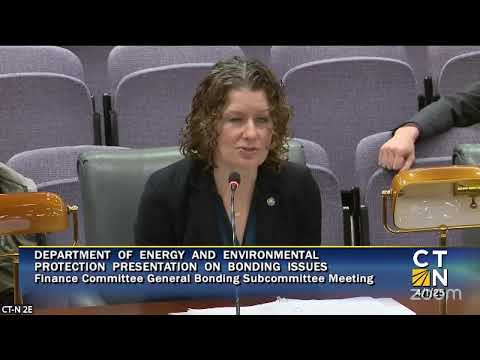
DEEP officials told the subcommittee that the governor's capital proposal includes funding to address hazardous-waste disposal sites and industrial-site remediation in urban areas, and they described work on Superfund sites and brownfield cleanups.
The governor's capital budget as presented includes $25,000,000 for hazardous-waste disposal sites and $24,000,000 for industrial-site remediation in urban areas. Agency staff said those amounts are intended to address some of the state's most challenging pollution problems, naming the Durham Meadows Superfund Site and the former Raymark site in Stratford as examples.
Graham Stevens described DEEP's brownfields work as a partnership with the Department of Economic and Community Development, with DEEP setting cleanup standards and DECD prioritizing redevelopment opportunities and running economic-development grant rounds for loans and municipal grants. Stevens said DEEP also has an Urban Sites Remedial Action Program funded by bond authorizations to support cleanups.
On landfills and Superfund monitoring, DEEP staff said Connecticut has 13 Superfund sites, about six or seven of which are former landfills, and that the agency uses EPA scoring and other processes to determine whether DEEP or the responsible party should manage cleanup and remediation.
Why it matters: remediation and brownfields funding affect environmental health, municipal redevelopment potential and local economic projects.
Ending: DEEP offered to provide the committee a fuller list of Superfund sites and grantees for brownfields and urban remediation programs.