Get Full Government Meeting Transcripts, Videos, & Alerts Forever!
Get email alerts on the Infrastructure topic
No spam. Unsubscribe anytime.
DEEP outlines capital requests for parks, hazardous waste cleanup, PFAS response and energy upgrades
Summary
Connecticut Department of Energy and Environmental Protection officials described the agency's capital priorities, including $70 million for state parks, allocations for hazardous waste and industrial-site remediation, PFAS response funding and $10 million for energy efficiency in state buildings.
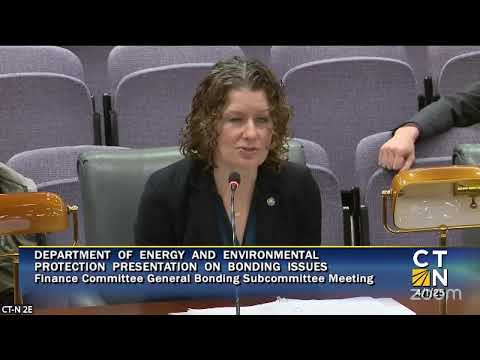
Connecticut Department of Energy and Environmental Protection officials told the Environment Subcommittee that the agency's capital priorities in the governor's proposed budget include large investments in state parks, hazardous waste cleanup, industrial-site remediation and programs to address PFAS contamination and energy efficiency.
The governor's capital proposal recommends $70,000,000 over the biennium for alterations, renovations and new construction at state parks and recreation facilities, $25,000,000 to address hazardous waste disposal sites, $24,000,000 for industrial site remediation in urban areas and $10,000,000 for PFAS contamination response through the potable water grant program, the agency said. DEEP also requested $10,000,000 over the biennium to support energy upgrades in state facilities.
Why it matters: the funding would target deferred maintenance at parks across the state, accelerate remediation of contaminated and formerly industrial urban sites, and expand funds to protect private wells from PFAS, a class of persistent chemicals that regulators and residents have raised concerns about.
Commissioner Katie Dykes opened the agency's presentation and introduced program leads to explain the proposals. Deputy Commissioner Mason Trumbull described how park projects are categorized and where the money would be used. "All the projects fall into those 3 major buckets," Trumbull said, referring to improvements that enhance visitor experience, repairs to historic park buildings and maintenance structures. He added that DEEP posts project details on the Restore Connecticut State Parks website as funds are allocated and work is completed.
On PFAS and potable water, agency staff said the $10,000,000 potable water grant program would continue to help protect residents who rely on private wells. "This funding is critical to help protect them from harmful pollutants," an agency presenter said when describing the potable water grants.
The agency framed the proposed energy efficiency funds as a measure to lower operating costs of state facilities through capital improvements. Officials also described a decade-long initiative called Restore Connecticut State Parks, saying recent appropriations and bipartisan legislative support have helped reduce a backlog of deferred maintenance.
DEEP staff told legislators the amounts requested are intended to be sustainable for project delivery: the agency said it aims to average about $30,000,000 in park work per year so funding can be used effectively rather than creating big spikes and gaps in delivery.
Ending: DEEP officials said they would provide additional details and project lists to the subcommittee on request and that more specific project schedules and web-listed project pages reflect which projects are completed, underway or upcoming.