Get Full Government Meeting Transcripts, Videos, & Alerts Forever!
Get email alerts on the Reparations topic
No spam. Unsubscribe anytime.
House floor rejects amendments seeking to broaden reparations commission’s scope
Summary
Delegates considered the creation of a Maryland Reparations Commission. Two floor amendments — one to include Union soldiers or descendants and another to direct combined state/local per‑pupil funding to students in one‑star schools — were both rejected; the bill remained on the calendar for further consideration.
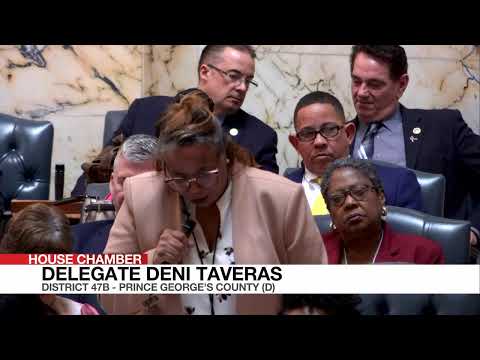
Annapolis, March 14 — The Maryland House considered a bill to establish a Maryland Reparations Commission and heard extended debate on the commission’s scope and purpose during floor session March 14.
The committee reported the measure favorably, and members debated two substantive amendments on the House floor. The first amendment would have expanded the commission’s covered populations to include "union soldiers who or others who fought to end slavery, or individuals whose ancestors served in the union army or fought to end slavery." The amendment sponsor framed it as a way to acknowledge and thank those who contributed to ending slavery; the bill’s committee chair countered that the bill is specifically targeted to address harms generated by state and local policies that enforced segregation, redlining, and other discriminatory practices during and after Reconstruction and Jim Crow.
The House rejected the union‑soldiers amendment on a roll call. The clerk reported "there'll be 100 votes in the negative; the amendment fails."
A second, unrelated amendment would have allowed state and local per‑pupil funding to follow students who were enrolled in public schools that had been rated 1 star the previous year, permitting them to use combined funding in public or nonpublic schools in or out of state. Supporters described the proposal as a remedy for chronically low-performing schools and urged lawmakers to give families alternatives. The committee chair and other members replied that the commission already has broad authority to examine a range of topics and make recommendations, and they asserted reparations is a distinct issue tied to the long history of slavery and state policy. The House also rejected the school‑choice funding amendment on a roll call (clerk recorded 99 votes in the negative).
After the amendment votes, the committee’s favorable report was adopted as amended and the bill was printed for third reading.
Why it matters
Floor debate made clear the bill’s sponsor and committee view the commission as a targeted body to study the legacy of slavery and subsequent state and local policies (for example, the 1910 Baltimore residential segregation ordinance and redlining) and to recommend remedies. Delegates who proposed the amendments argued for expanding the commission’s remit or using the bill as a vehicle for contemporary remedies such as funding that follows students in failing schools; the House rejected those expansions.