Get Full Government Meeting Transcripts, Videos, & Alerts Forever!
Get email alerts on the Public Records Pia topic
No spam. Unsubscribe anytime.
Maryland AG’s office seeks narrower public‑records exemption for documents created for litigation
Summary
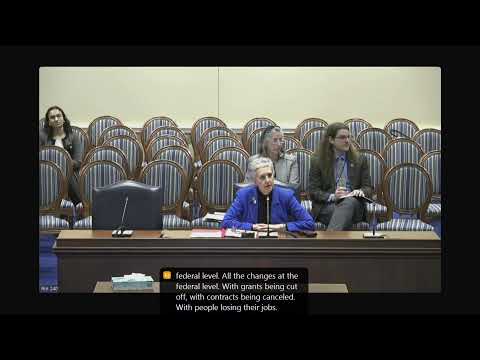
The Maryland Office of the Attorney General told the Health and Government Operations Committee on April 1 that it supports a narrowly tailored amendment to the Public Information Act that would allow custodians to withhold records created for the purpose of pending or reasonably anticipated litigation.
The Maryland Office of the Attorney General told the Health and Government Operations Committee on April 1 that it supports a narrowly tailored amendment to the Public Information Act that would allow custodians to withhold records created for the purpose of pending or reasonably anticipated litigation.
The proposal, carried to the panel by Patrick Hughes of the Attorney General’s Office, would not create a blanket bar on records related to litigation. “As amended, the bill would apply only to records created for purposes of pending or reasonably anticipated litigation,” Hughes said, adding that the amended language defines “reasonably anticipated litigation” as “a situation where there’s concrete evidence that the litigation is expected to occur based on the current facts and circumstances at the time of the request.”
Committee members pressed the AG’s office on what counts as “concrete evidence,” who makes the initial withholding decision and whether existing legal doctrines already protect such records.
Why it matters: The bill would add an explicit, discretionary exemption to the Public Information Act (PIA) aimed at preventing opposing parties or others from using records requests to disrupt government litigation or to obtain litigation strategy that government actors prepare for the purpose of the litigation. Supporters say it clarifies protections that are sometimes difficult to apply in practice; opponents say it risks narrowing transparency and is redundant with privileges like attorney work product.
Hughes told the committee the amended bill is narrower than an earlier House cross‑file and is modeled in part on exemptions in at least seven other states. He said the change would protect “sensitive records that were created for the very purposes of the litigation,” and contrasted that category with underlying documents that predate the possibility of litigation and remain subject to requests.
Lawmakers asked for concrete examples of the new definition. Hughes offered two: internal agency handling of claims filed under the Maryland Tort Claims Act — where nonlawyers may evaluate potential claims — and coordinated conversations among state attorneys general contemplating joint litigation. He said those are situations where the work product or attorney‑client privileges might not fully or clearly apply, and where a statutory exemption could reduce contested disclosure fights.
Several delegates voiced concern that the change would unduly restrict access. “My concern with this bill is the lack of transparency,” Delegate Austin said, noting courts already limit disclosure of attorney work product and settlement negotiations. Delegate Chisholm asked whether a public announcement by the AG that litigation was coming would qualify as “concrete evidence.” Hughes said the Senate committee that amended the bill drafted the definition but the AG’s office is open to working with legislators on tweaks.
Procedural and enforcement points: The bill would leave the initial determination to the custodian of the records; requesters who disagree could pursue remedies under the PIA, including the Ombudsman, the Public Information Compliance Board or Circuit Court review, Hughes said. The exemption would be discretionary, not mandatory: custodians would still have to show that withholding serves the public interest.
The committee hearing record shows extended questioning and requests for post‑hearing follow up; the transcript does not record a committee vote on the measure.
Ending note: Hughes urged a favorable report on Senate Bill 5 55 as amended and said the AG’s office is willing to work with the committee on language to address concerns about vagueness and transparency.