Get Full Government Meeting Transcripts, Videos, & Alerts Forever!
Get email alerts on the Consumer Protection topic
No spam. Unsubscribe anytime.
House rejects statewide solicitation standard in disaster consumer-protection bill
Summary
Delegates debated House Bill 1348, a consumer-protection measure restricting in-person solicitation following disasters. The House declined amendments to make the rule uniform across the state and to require contractors be paid for time-and-materials when homeowners rescind ('t and m'); both proposed changes failed on the floor.
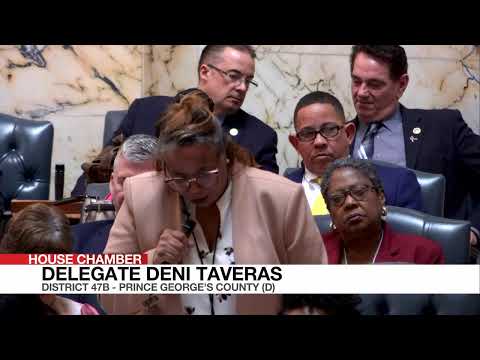
Annapolis, March 14 — The Maryland House of Delegates considered House Bill 1348, a consumer-protection bill that seeks to limit in-person solicitation following disasters and to set rules for rescission of home-improvement contracts tied to disaster remediation.
On the floor, a delegate proposed an amendment to make the bill’s solicitation restrictions uniform across all counties and municipalities rather than allowing local governments to set potentially different standards. Supporters of uniformity said consistent statewide rules would help contractors from outside Maryland and reduce confusion after disasters; opponents argued that local conditions vary and counties should retain discretion. "When we're talking about disaster responses, you know, it's important to kinda have a uniform policy and procedure across jurisdictions," the amendment sponsor said. "…if Maryland has a set standard, it's gonna be a lot better for folks coming to do work out of state because they'll know the roots rules of the road."
The House rejected that amendment on a roll call. The clerk reported: "There being 97 votes in the negative, the amendment fails."
A separate amendment would have required that a homeowner who rescinds a home-improvement contract compensate the contractor for time and materials expended before rescission (a "t and m" provision). The floor leader and several delegates said the industry provided the rescission language already in the bill and cautioned that requiring retroactive t-and-m compensation could chill contractors' willingness to respond quickly after disasters. "If there are fears that they are not gonna be made whole, there could be a chilling effect on the industry," one supporter of the floor-leader position said. The House rejected the t-and-m amendment as well; the clerk recorded that the amendment failed.
What happened next
With those amendments rejected, the bill otherwise moved forward on the calendar; the floor record shows the bill was ordered passed to third reading after committee amendments and floor action were resolved.
Why it matters
The bill is intended to protect homeowners from aggressive solicitation or unfair contract terms immediately after storms or other disasters. Floor debate highlighted an ongoing policy tension: whether to impose uniform statewide rules after disasters, or to preserve local flexibility to reflect different community layouts, building stocks and disaster profiles.
Speakers quoted in this report spoke on March 14 during the HB 1348 debate; quotes are verbatim from the House floor record.