Get Full Government Meeting Transcripts, Videos, & Alerts Forever!
Get email alerts on the Housing topic
No spam. Unsubscribe anytime.
House advances Housing for Jobs Act; lawmakers debate state targets, school-capacity and local control
Summary
The Maryland House of Delegates debated House Bill 503, the Housing for Jobs Act, on March 14 in Annapolis, advancing a version that establishes a HOME Commission and directs DHCD to work with local jurisdictions on 10‑year housing-production targets while rejecting amendments tied to school-capacity freezes and a Baltimore County exemption.
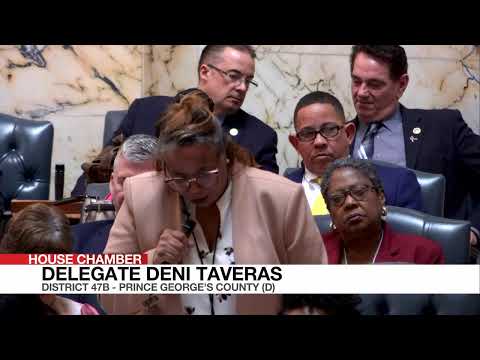
Annapolis, March 14 — The Maryland House of Delegates debated House Bill 503, the "Housing for Jobs Act," during floor session March 14, hearing competing views over whether the state should set housing-production targets and how much deference to give local governments.
The bill as amended establishes the HOME Commission (Housing Opportunities Made Equitable Commission), directs the Department of Housing and Community Development (DHCD) to work with counties and municipal corporations that exercise zoning authority to set housing-production targets beginning Jan. 1, 2026 and every 10 years after that, and requires DHCD to publish annual reports assessing jurisdictions' progress. Delegates said the targets are nonbinding and intended to support local planning.
Supporters argued the measure would create consistency across Maryland and help close a documented housing shortfall. "The intent of the bill is to strengthen local jurisdictions' efforts to expand housing production, and it aims to do that in a very customized and targeted way that addresses the conditions, the aspirations, and the procedures that each jurisdiction uniquely has," a floor leader said on the House floor.
Opponents raised concerns that the bill could encroach on local land-use decisions or fail to account for immediate school-capacity problems tied to new housing. A delegate offering an amendment that would allow jurisdictions to delay housing projects tied to overcrowded schools argued the change would prevent new developments from worsening school crowding. "So what this amendment says is the counties can push this off even further and not build the housing project, not overcrowd the schools until the problem is fixed," the delegate said.
The House rejected that school-capacity amendment on a roll call. "There being 97 votes in the negative, the amendment fails," the clerk reported after the roll call.
Lawmakers also debated and rejected an amendment proposed to exempt Baltimore County from the bill's 10‑year target process on the grounds that Baltimore County already uses a more frequent comprehensive zoning map process; that amendment likewise failed on a roll call (97 votes in the negative). Supporters of the underlying bill said the statutory process would not override local comprehensive planning and emphasized that targets are nonbinding and intended to be set collaboratively with each jurisdiction.
One amendment adopted as friendly during floor debate added "residential real estate owners" to the commission's membership; the chair recognized and the House accepted that change by voice vote.
What happened next
After debate and the handling of amendments, the bill as amended was ordered printed for third reading.
Why it matters
Supporters said the bill is intended to help the state address a reported housing deficit by coordinating goal-setting and technical support across counties and municipalities; opponents pressed that local control over school-capacity decisions and land-use remains essential. The discussion reflects a broader tension in Maryland policy between state-level goals to increase housing production and local authority over zoning and school planning.
Votes at a glance
- Adoption of amendment adding "residential real estate owners" to the HOME Commission (amendment 453320/1): accepted (voice vote; amendment adopted on the floor). - Amendment to permit counties to delay/deny housing projects until school overcrowding is resolved (amendment 753625/1): failed (roll call; 97 votes in the negative). - Amendment to exempt Baltimore County from the 10‑year target requirement (amendment 633325/1): failed (roll call; 97 votes in the negative).
Speakers quoted in this report spoke during the HB 503 discussion on March 14; quotes are verbatim from the House floor record.