
Olmsted County outlines 2025 commercial revaluation, cites staffing shortfalls and large increases for some property types
Get AI-powered insights, summaries, and transcripts
Sign Up Free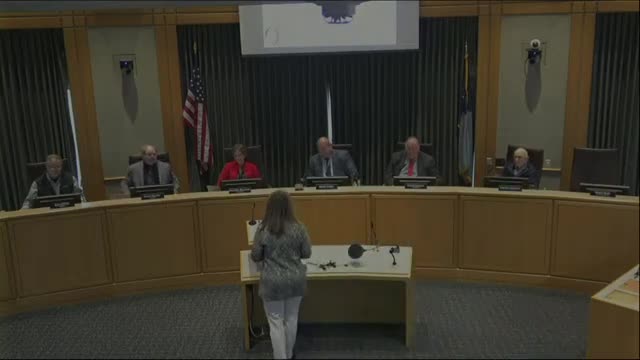
Summary
County property records staff told commissioners that revaluation work for 2025 used sales from Oct. 1, 2023–Sept. 30, 2024; statutes require inspections at least once every five years and assessments as of Jan. 2. Staff reported substantial increases in some commercial categories driven in part by years without inspection and limited staffing.
Olmsted County property records and licensing staff updated the Board of Commissioners on the 2025 commercial property revaluation at a county board meeting (date not specified), describing statutory requirements, the sales period used for valuations, staffing challenges and large percentage increases in some property categories.
Mary Heft, Director of Property Records and Licensing, and Julie Hackman, Associate Director of Property Records and Licensing and County Assessor, presented the informational item with Deputy County Assessor and Commercial Supervisor Jason McCaslin. Hackman emphasized that assessors must value properties ‘‘at a value that represents what that property would sell for in an open market arm’s length transaction as of January 2 of every year,’’ citing Minnesota statute and Department of Revenue procedures governing the assessment process.
Officials told commissioners the office used sales dated Oct. 1, 2023, through Sept. 30, 2024, to set values for the Jan. 2, 2025 assessment date — values that determine taxes payable in 2026. Hackman explained that Minnesota law requires a physical inspection of each property at least once every five years (Minn. Stat. § 273.01) and that the assessor’s sales ratio study must generally fall between 90% and 105% of sale prices to comply with Minnesota Department of Revenue standards (Minn. Stat. § 273.11). The presenters said that, statewide and in Olmsted County, the sales used in a study can be up to 18 months prior to the valuation date, which can make assessments appear out of sync with very recent sales.
Hackman and McCaslin said industrial properties saw some of the largest increases this year (the presentation cited an approximate 17% increase for industrial property), and other categories reviewed this year included hotels, convenience stores, restaurants, clinic space and fourplex apartments. The presenters said fourplex values have increased in double digits for three consecutive years based on sales trends and that some vacant land and parking‑lot parcels showed very large percentage increases relative to previously dated values because those parcels had not been reappraised for many years — in some cases more than a decade.
To help affected owners, staff said they mailed advance letters to 626 commercial property owners who had more than a 20% increase ahead of the valuation notices; after valuation notices were mailed, staff reported 58 property owners had contacted the assessor’s office to date. Hackman said staff aim to educate owners about the appraisal process and sales comparables and urged commissioners to direct taxpayers to the assessor’s office for questions.
The presentation described appeal options: property owners may first use an open‑book process (where available) or appeal to a local board of appeal and equalization; if unresolved locally, the County Board of Equalization hears appeals in June; after the county board adjourns by statute, valuation or classification changes cannot be made locally and the remaining remedy is filing with the Minnesota Tax Court (tax court filings may be made by April 30 of the year in which the taxes are payable). Staff stressed that if the county is materially out of compliance with sales‑ratio standards, the Department of Revenue can require adjustments and, in extreme cases, step in to perform revaluation work.
Commissioners asked several questions about how sales that might be ‘‘non‑market’’ (for example, negotiated sales tied to a larger development) are treated. McCaslin said staff verify sales by contacting buyers, sellers or brokers and that the Department of Revenue reviews the county’s notes; if the department concludes a sale should remain in the study, it will. Hackman and McCaslin said the office has limited capacity and has been focusing this year on property types with enough sales to support a statistically valid sales study.
County staff said they have created a commercial team and that this year is the first year of the five‑year quintile revaluation cycle for the county. They acknowledged the county had been out of full compliance for several years because of staffing shortages and said the current effort is intended to catch up over the next four years. Staff and a commissioner asked that the board consider staffing and budget implications during upcoming budget discussions to avoid repeated backlogs.
No formal vote was required for the informational item. Commissioners thanked staff for the outreach and asked staff to continue communicating with property owners and the board about potential budget or staffing needs to sustain revaluation work.