Get Full Government Meeting Transcripts, Videos, & Alerts Forever!
Get email alerts on the Abuse Registry topic
No spam. Unsubscribe anytime.
Committee advances resolution to study abuse registry for at‑risk care workers
Summary
The House Committee on Human Relations & Aging approved House Resolution 816 as amended to create a study committee to examine state-level abuse registries and service delivery for at‑risk populations; members agreed to reduce the committee size, strike nonmember compensation, and involve the Georgia Bureau of Investigation in consultations.
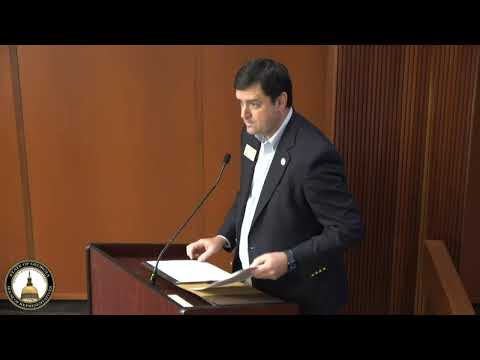
Representative Hilton, the bill’s sponsor, told the House Committee on Human Relations & Aging that House Resolution 816 would create a House study committee to examine “at‑risk populations and [an] abuse registry” and to review models used in Tennessee, Kentucky and Texas.
The measure, as introduced, would have created an 11‑member study committee. Committee members approved amendments during the meeting to reduce the panel to eight members, cut the number of House members from five to three, reduce nonlegislative members from six to five, strike two listed nonmember positions (lines 30–31) and remove a provision allowing compensation for nonmembers (lines 64–68). Representative Frey moved to accept the amendments, and the motion was seconded; the committee passed the resolution as amended by voice vote.
Nut graf: Supporters said the study would examine ways states flag substantiated abuse that did not result in criminal convictions so employers hiring caregivers can check whether an applicant appears in a registry. Proponents described the effort as a fact‑finding and policy‑design exercise rather than a funding request.
Committee members and invited witnesses described three subjects they expect the study to cover: the structure and membership of a registry, the appeals processes for people listed when no criminal charge was filed, and operational questions about how quickly background information can be returned to employers.
Representative Hilton said the proposal would look at cases “where there has been substantiated abuse, but not criminal action taken,” and that a registry could help employers discover prior substantiations when hiring caregivers who must be able to start quickly. He also asked the committee to include at least one meeting devoted to how state services are delivered to people with disabilities, saying some families find the system hard to navigate.
Representative Frey moved that the committee accept the amendments as described by general counsel and the bill’s author; the motion was seconded and carried. The committee adopted the resolution as amended and advanced it to the next stage.
The committee discussed, without a formal vote, including the Georgia Bureau of Investigation (GBI) in the study’s consultations because the GBI currently manages much of the state database used by providers. Members also mentioned the Department of Community Health and the Division of Behavioral Health and Developmental Disabilities (DBHDD) as agencies tied to related data and licensing processes. Representatives noted the Prosecuting Attorney’s Council and a prosecutor experienced in elder‑abuse cases (Will Johnson) as potential contributors to the study.
Witnesses called by the bill’s sponsor included Rena Harris of the Georgia Advocacy Office, Nancy Pietra from the Alzheimer’s Association and Charlotte Densmore of the Georgia Council on Developmental Disabilities; they were offered time to speak in support during the committee’s consideration. Committee discussion emphasized that any registry model would need a clear appeals process for people who have no criminal conviction and sufficient operational speed so employers are not left unable to hire caregivers while waiting for checks to complete.
The resolution passed the committee by voice vote. The sponsor and committee staff said they would incorporate the agreed amendments into the bill text and include GBI and other relevant agencies in the study’s work going forward.