Get Full Government Meeting Transcripts, Videos, & Alerts Forever!
Get email alerts on the Tribal Permitting topic
No spam. Unsubscribe anytime.
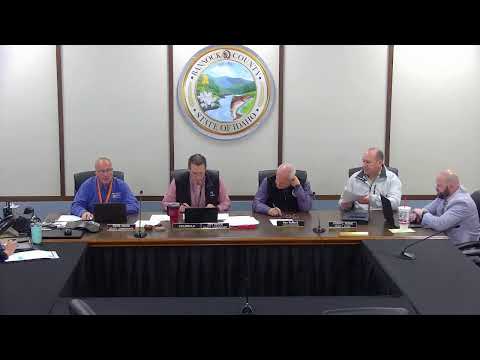
Bannock County and Fort Hall tribal representatives discuss memorandum of understanding to simplify permitting
Summary
County planning staff and tribal land-use leaders discussed drafting a memorandum of understanding (MOU) so property owners know whether to seek permits from Bannock County or the tribe; staff were directed to draft language based on a Bingham County template for legal review and tribal council consideration.
Bannock County commissioners and representatives from the Fort Hall Reservation discussed a proposed memorandum of understanding on permitting that would direct property owners to a single point of contact for subdivision and land-use permits.
Tristan Borkwin, assistant planning director for Bannock County, told the commission the county currently issues permits for fee-simple land while the tribe issues permits for tribal land and that property owners are confused about where to apply. “Half of them think they need to come to us. Half of them think they need to go to the tribe,” Borkwin said, urging consideration of an MOU that would centralize where owners apply.
County and tribal officials said they have met three times in recent months and have been meeting quarterly to work through jurisdictional questions. Laurie Niffin, a land use policy commissioner for the tribe, said an MOU would reduce repeated referrals and duplicate fee payments. “I think it would be good to have all in one spot, and so the property owners know where to go,” Niffin said.
Under the existing practice described at the meeting, Bannock County handles permits for fee-simple (non‑tribal) ground and the tribe handles tribal ground. Commissioners and tribal leaders discussed using a memorandum modeled on one the tribe has with Bingham County as a template. County legal staff were identified as the next step for drafting: the chair said county counsel Monty and John would draft language, the tribe would take it to tribal council, and the commission would then review and sign if both jurisdictions approve.
Commissioners and tribal representatives also discussed outreach and public education to notify property owners of the change. Planning staff suggested posting maps and guidance on the county website and updating map layers to show jurisdictional direction; tribal representatives and county officials recommended directly sharing the memo with local building contractors and realtors to speed awareness. Commissioner Bullock asked how many fee-simple properties would be affected; a commissioner estimated “Probably. Hundreds.” but participants described that number as a rough estimate rather than a formal inventory.
No formal MOU was approved at the meeting. The commission recorded direction that county and tribal legal staff will draft an agreement using the Bingham County template for review by both governing bodies, after which the commission will consider signature.
Members of the tribe asked for time to review the county’s 2025 comprehensive plan before the commission signs it; county staff said the plan was being signed at the meeting and invited the tribe to submit any suggested amendments by contacting Tristan Borkwin.
Next steps: county counsel will prepare draft language based on existing templates and return the draft to the tribe and the board for review; the tribe will review the county comprehensive plan separately and provide suggested changes if needed.