Get Full Government Meeting Transcripts, Videos, & Alerts Forever!
Get email alerts on the Medicaid Outpatient Mental Health topic
No spam. Unsubscribe anytime.
Senate Taxes Committee advances bill to raise outpatient mental-health Medicaid rates using health-plan assessment
Summary
Senate File 1402, a bill to increase Medicaid reimbursement for outpatient mental-health and clinic-based pediatric services and to finance the increases through an assessment on managed-care organizations, was passed without recommendation and referred to the Senate Committee on Health and Human Services on April 1.
Senate File 1402, a bill to increase Medicaid reimbursement for outpatient mental-health and clinic-based pediatric services and to finance the increases through an assessment on managed-care organizations, was passed without recommendation and referred to the Senate Committee on Health and Human Services on April 1.
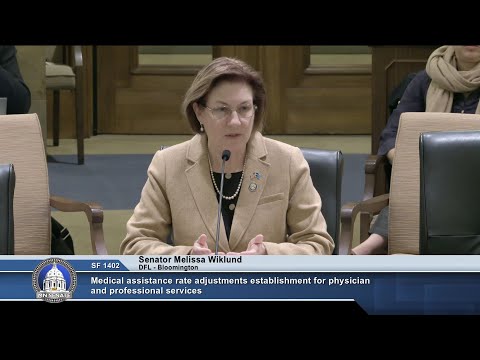
Senator Wicklund presented the bill as an effort to implement a 2024 Department of Human Services (DHS) rate study and to address what he described as “a crisis of children boarding in emergency rooms, detention facilities, and within counties” and widespread staffing shortages in outpatient care. "This bill implements that rate study and uses a health plan assessment to pay for those increases," Wicklund said.
The bill would use an MCO assessment to qualify for federal supplemental (directed) payments, drawing additional federal Medicaid funds. Wicklund said the proposal is crafted so health-plan partners would receive back roughly 99% of their assessment through higher capitation rates. "These types of assessments have become an integral financing source for Medicaid nationwide and have been adopted by both blue and red states," he said.
Committee members asked about federal approval and preemption. Senator Weber asked whether the assessment would capture claims covered by third-party administrators or ERISA plans; Wicklund replied the assessment is on MCOs and is not intended to directly affect ERISA plans. On whether federal approval is automatic, Wicklund said approval from the Centers for Medicare & Medicaid Services (CMS) is required before implementation. When asked what would happen if CMS denied the plan, Wicklund said the assessment would not go into effect without federal approval.
A representative of the Minnesota Council of Health Plans, Dan Andreasen, testified in opposition to the assessment mechanism as written, saying the bill’s tax on the fully insured commercial market would fall on nonprofit health plans and likely be passed through in increased premiums. "As written...there would be an increased cost to people in the commercial market, without seeing a reduction in their premiums," Andreasen told the committee.
Senator Cline moved that SF 1402 be passed without recommendation and referred to Health and Human Services; the committee recorded the motion as carried by voice vote. The committee did not take additional formal action on implementation language; senators noted federal CMS approval would be required before assessments and directed payments could be implemented.
The bill will be considered next in Health and Human Services, where technical details about assessment design, premium pass-through protections and CMS approval steps are expected to receive further scrutiny.