Get Full Government Meeting Transcripts, Videos, & Alerts Forever!
Get email alerts on the Small Business topic
No spam. Unsubscribe anytime.
Women's Entrepreneurial Opportunity Project urges better procurement access, cites federal contracting shifts and SB28 concerns
Summary
Representatives of the Women's Entrepreneurial Opportunity Project (WEAP) told the committee they support women entrepreneurs through training and procurement guidance, urged certification equivalencies (GSA/DBE/MBE), and raised concerns about regulatory changes under SB 28 (Red Tape Rollback Act).
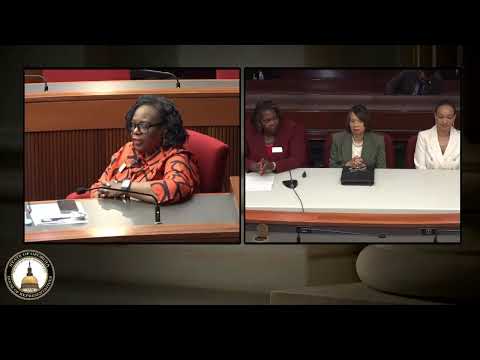
Antoinette Fall, founder of the Women’s Entrepreneurial Opportunity Project (WEAP), briefed the Small Business Development Committee on programs the nonprofit provides to women entrepreneurs, including leadership development, procurement guidance and networking.
Fall said WEAP launched in 1999 as a 501(c)(3) and that the nonprofit focuses on civic engagement, leadership development and small‑business support. She emphasized that “entrepreneurship is more than just a career choice it is a critical pathway to economic self sufficiency.”
Shanae Commodore, who described 35 years of experience in federal procurement, told the committee WEAP helps firms navigate federal and state contracting requirements, and that many federal contract holders face shifting opportunities because of procurement changes. Commodore suggested the state could help by clarifying certification equivalencies and training entrepreneurs in business development, AI tools and federal contracting pathways.
Montez Diamond, founder of Endow Group and a WEAP collaborator, raised concerns about SB 28, described in his remarks as the Red Tape Rollback Act of 2025. He said, “as of March 31, 2025, SB 28 has passed the Georgia Senate and is under consideration in the House,” and described provisions that would require economic impact analyses for major regulatory changes and increase elected‑official oversight of such changes. Diamond said small businesses want written opportunities to participate beyond public comment, including mechanisms that could embed small‑business input into regulatory drafting or task forces.
Speakers urged clearer equivalencies between federal certifications (for example, GSA schedule holders or federal woman‑owned small business status) and state program certifications such as DBE or MBE. THEY asked the committee to consider ways to reduce duplicated certification costs and to provide clearer, plain‑language public notices explaining how regulatory changes affect small businesses.
Committee members asked for follow‑up research on the cost of compliance and the effect of regulation on small businesses; WEAP offered to provide resources and suggested partnerships to increase procurement readiness across Georgia. No committee votes were taken on the presentations.