Get Full Government Meeting Transcripts, Videos, & Alerts Forever!
Get email alerts on the Agriculture Labeling topic
No spam. Unsubscribe anytime.
Georgia committee hears bill to tighten labeling, testing for grass‑fed and pasture‑raised meat
Summary
On April 1 the House Agriculture & Consumer Affairs Committee discussed HBH 17, a bill that would set definitions, testing requirements and labeling disclosures for large-scale grass‑fed and pasture‑raised meat and poultry producers; the measure had a hearing only and no formal vote.
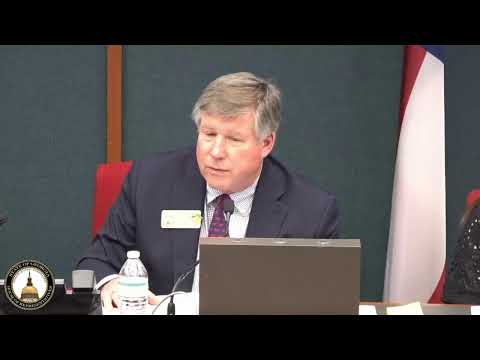
On April 1 the Georgia House Agriculture & Consumer Affairs Committee heard HBH 17 (LC 600163S), a bill the committee chair said is intended to increase transparency and fairness in meat and poultry labeling and to require routine testing for certain animal diseases.
The bill’s author, Chairman Dickey, told the committee the proposal targets large-scale producers and seeks standardized definitions — for example, distinguishing animals raised entirely on pasture from those that were later grain‑finished — so “consumers are getting what they’re paying for.”
The bill as drafted would exempt small producers and set numerical thresholds for “large‑scale” operations: the text in committee packets defined large‑scale grass‑fed meat producers as operations producing at least 1,000,000 pounds per year and large‑scale pasture‑raised poultry producers at 250,000 birds per year. The draft also would require routine testing for highly pathogenic avian influenza in pasture‑raised flocks; one line in the draft specifies that a minimum of 3% of a live poultry flock would be tested each week.
Members pressed for implementation details and for input from producers and the Georgia Department of Agriculture. Representative Huddleston, who identified himself as both a cattle and poultry producer, noted the role of migratory birds in spreading avian influenza and described biosecurity measures on integrated poultry farms. “Avian Influenza… is transferred by migratory birds in the fly zones,” Huddleston said, adding that enclosed integrator houses have controlled access while free‑range flocks are more exposed.
Representative Osteen asked about the logistics of the testing requirement: “How hard is that to do?” she asked of the 3% weekly testing provision. Chairman Dickey said he did not have an immediate answer and that the committee would look into implementation details with the department.
Representative Donahue described common marketing practices that the bill is intended to clarify, saying some cattle sold as “grass fed” are later placed on grain for a short period before sale. “So are they still grass fed? … I would say no,” Donahue said, arguing for clearer definitions.
Representative Dawson called the measure “one of the most innovative, refreshing ones we’ve had so far,” and several members encouraged the author to solicit producer input during the off season and to coordinate with the Department of Agriculture and industry groups.
Chairman Dickey said the draft includes penalties for violations but did not specify amounts in committee. He emphasized the bill is “hearing only” at this stage and that the committee will pursue further discussion and stakeholder input in the off season, with the bill to remain in committee for additional drafting and review.
The committee did not take a formal vote on HBH 17 during the session; the author asked members to review the draft and provide feedback to staff and to the department. Several committee staff and guests were thanked at the close of the meeting; no deadlines or next hearing dates for HBH 17 were set on the record.
Why it matters: The bill would create state‑level definitions and disclosure requirements for meat and poultry labels and would impose routine disease‑testing requirements on defined large‑scale producers. If advanced and enacted, it would shift some inspection and enforcement responsibilities to state authorities and could affect large producers’ compliance costs and labeling practices.