Get Full Government Meeting Transcripts, Videos, & Alerts Forever!
Get email alerts on the Mtss topic
No spam. Unsubscribe anytime.
Curriculum committee: Kennett Consolidated SD begins multi‑year rollout of MTSS, prioritizing Tier 1 instruction
Summary
At a March 31 curriculum committee meeting, district staff described a multi‑year plan to implement multi‑tiered systems of support (MTSS) for academics and behavior. The district is in year one of a three‑year plan focused on strengthening Tier 1 instruction, piloting SEL screeners and training restorative-practices champions.
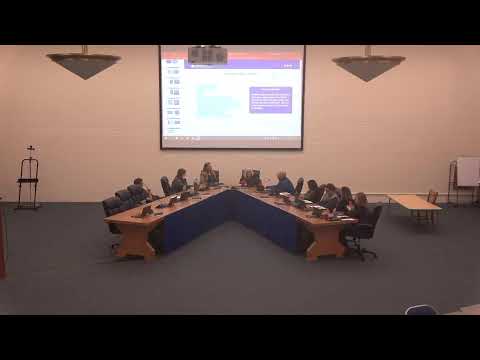
Kennett Consolidated School District curriculum committee members heard a district presentation March 31 on multi‑tiered systems of support (MTSS), a framework the district plans to roll out over multiple years to align academic instruction, social‑emotional learning and behavior supports.
Superintendent Kimberly Rizzo Saunders and district instructional leaders told the committee the district is in year one of a three‑year MTSS action plan that focuses first on a stronger Tier 1 core curriculum and building staff capacity for restorative and trauma‑informed practices. "MTSS is a framework designed to provide academic, behavioral, social, and emotional support to all students using proactive, preventative, and data driven approaches," Cassandra Jones, director of pupil services and supports, said during the presentation.
Key points and next steps
- Implementation timeline and scope: District staff described a three‑year roll‑out. Year one is concentrated on Tier 1 work — establishing a guaranteed, viable, standards‑aligned core curriculum and training staff in restorative and trauma‑informed practices — with Tier 2 and Tier 3 frameworks to be developed and scaled in years two and three. For secondary schools the district will align with Pennsylvania Department of Education guidance that recommends a two‑tier model for grades 9–12 and a three‑tier model for grades K–8.
- Progress to date: The district has (a) renewed a school‑based mental‑health contract, (b) trained restorative‑practices "champions" through the International Institute for Restorative Practices (the district reported 20 internal trainers), (c) developed criteria and a procedural manual for school‑based mental‑health services, and (d) created a draft positive‑behavior support manual for each building. Jones said staff are "on track to check every box for year 1" of the social, emotional and behavioral action plan.
- Screening and assessment work: Staff are piloting universal SEL screeners and expect to present a recommended tool for board approval in June. Academically, the district will continue universal screening (the presentation noted use of AIMSwebPlus for reading and i‑Ready diagnostics for math in K‑8) and is building a K‑12 assessment framework that defines which tools are used, when they are administered and how teams will analyze results.
- Curriculum and instructional priorities: The district is conducting a resource/curriculum audit, establishing curriculum‑writing teams and developing multi‑year curriculum maps tied to standards, learning progressions and formative assessment. Staff emphasized the connection between strong Tier 1 instruction and the effectiveness of supplemental Tier 2 and Tier 3 interventions.
- Capacity and training: Staff reported ongoing professional development and onsite coaching in restorative practices and trauma‑informed instruction, plus plans for specialized training for Tier 2 and Tier 3 interventions. The district also plans to finalize an MTSS fidelity rubric and data‑team protocols to standardize progress monitoring and intervention decisions.
Committee questions and timeline requests
Board committee members asked for clearer timelines tying curriculum adoption, vendor contracts and professional development to the MTSS action plan. Instructional supervisors Rebecca Vitry and Jen Miller told the committee they expect to provide a detailed timeline for academic frameworks by September, to align with the district's strategic‑plan schedule and budget discussions.
Committee members also sought clarity about secondary implementation. Staff explained the two‑tier secondary model will emphasize universal access to academic supports (for example, subject‑specific tutoring or enrichment available to students broadly) while reserving intensive individualized supports for a smaller set of students who do not respond to those measures.
The committee requested periodic progress updates as the district moves from Tier 1 foundational work toward wider Tier 2 and Tier 3 implementation.