Get Full Government Meeting Transcripts, Videos, & Alerts Forever!
Get email alerts on the Budget And Finance topic
No spam. Unsubscribe anytime.
Town administrator warns of tight FY26 budget as state aid and growth fall short
Summary
Town Administrator Andrew Zukfoth and finance staff presented a draft FY26 budget showing a fall in state aid (smart growth), reduced new growth timing for major projects, and reliance on free cash and cuts; officials warned of potential cuts or an override in coming years.
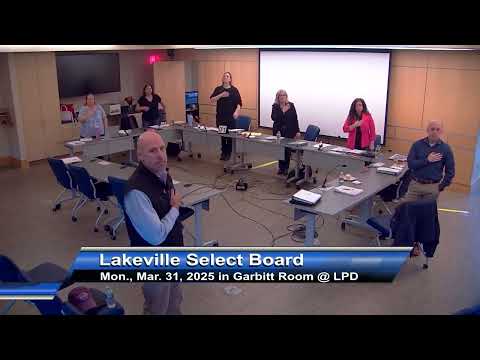
Town Administrator Andrew Zukfoth and town finance staff presented the draft fiscal 2026 budget at the March 31 Select Board meeting, saying the town faces tighter revenues and several multi-year risks that could force cuts or a future override.
Zukfoth told the board the town's projection shows a drop in state aid tied to the Smart Growth program, with Lakeville's FY26 allotment falling below prior averages. He said Smart Growth awards shrank because more towns applied for the same statewide pool. That decline, he said, reduces revenue by roughly $325,000 relative to expectations and will not be fully resolved until the Legislature or state agencies act.
The presentation reviewed line-by-line revenue assumptions: the tax levy increase (2.5 percent), increases in motor vehicle excise and EMS receipts, and the transfer of the transfer station enterprise fund into the general fund. Town staff reported they will inherit the transfer station's revenue and its corresponding expenses, producing little net gain.
Zukfoth highlighted that two large development projects (Rhino/Warehousing and Rocky Woods) are unlikely to generate near-term new-growth revenue because permitting and buildout will take several years. He said other commercial projects could produce nearer-term growth but that the most significant revenue drivers remain uncertain.
On the expense side, fixed costs are rising, notably pension assessments (Plymouth County retirement) and health insurance. Zukfoth said retirement assessments are up about 10 percent and health insurance an estimated 8 percent; together these increases, plus contractual obligations, push general costs higher.
Public-safety staffing and grant dependence drew extended discussion. Officials described four firefighters currently funded by ARPA who are scheduled to be removed from the budget. Some board members and the administrator said replacing those positions is unaffordable within the current FY26 baseline; others urged continued pursuit of SAFER grants and other revenue to retain staffing. The chief's overtime and ambulance billing were singled out as areas for additional data and follow-up.
Free cash certified after FY24 totaled $1.42 million; draft FY26 uses roughly $362,856 of free cash for the operating budget, $150,000 for OPEB and $470,000 for capital, leaving a balance of about $422,786. Staff warned that free cash is a one-time resource that cannot sustainably cover recurring operating costs.
Budget options and next steps: staff identified possible new or increased local revenues (meals tax, short-term rental fees, EMS rate changes) but said none are immediate fixes. They also proposed capital prioritization and suggested an economic development strategy to increase future new growth. Zukfoth said the town may need to consider an operational override in FY27 unless significant cuts or new revenues are secured.
Why it matters: The presentation framed FY26 as a constrained year with decisions that could affect services, staffing and capital planning. The Select Board and Finance Committee scheduled further departmental reviews and asked department heads to provide detailed data on ambulance billing, overtime and staffing patterns ahead of select board budget deliberations.