Get Full Government Meeting Transcripts, Videos, & Alerts Forever!
Get email alerts on the Finance topic
No spam. Unsubscribe anytime.
Finance staff reports stable revenues; new infrastructure fee generated $871,000 in first month
Summary
District finance staff told the board that collections are slightly above projections for the fiscal year, sales tax is trending up, and the new infrastructure (impact) fee dedicated to school capital produced $871,000 in its first month and will be tracked in a new fund (121).
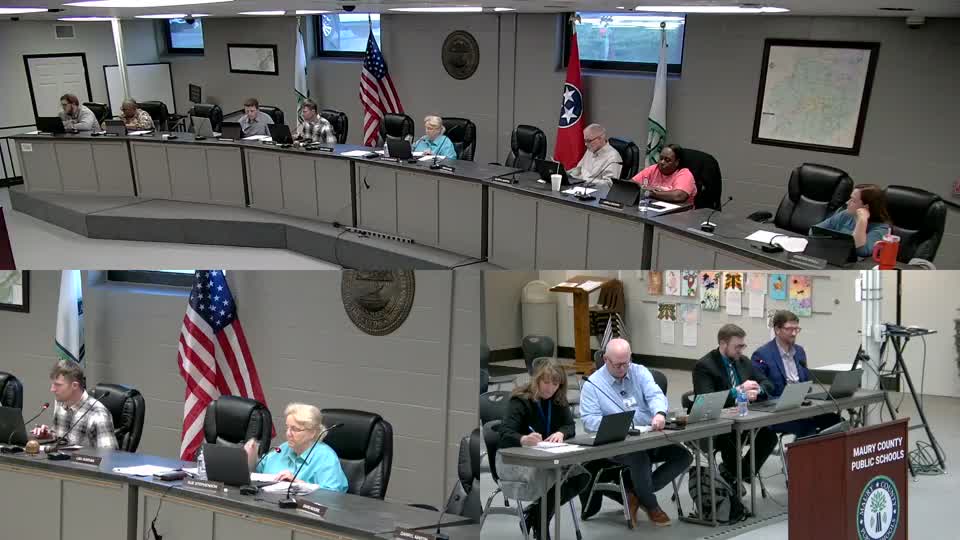
Maury County school finance staff briefed the board on monthly financials, reporting that property‑tax and sales‑tax revenues have met or exceeded this year’s projections and that the district’s fund balance should be updated after audit numbers are finalized next month.
Staff noted the new school infrastructure/impact fee (replacing the prior adequate‑facilities tax) started collecting in November and produced $871,000 in its first month. The finance presenter explained the comptroller recommended the district move those receipts into a separate 121 fund to segregate the new fee revenue for school capital and debt payments. "We have been asked by the comptroller's office, to move it into its own 121 fund," staff said. The presenter added the fee is restricted to school capital and debt reduction and that initial receipts exceeded expectations because of a run of home sales and a one‑time catch up.
Staff projected the district could exceed the reduced sales‑tax budget (previously $27.9 million) and estimated fiscal‑year sales tax receipts could surpass $30 million, the highest in three years if current trends continue. The finance presenter also reported the district’s current (unaudited) fund balance and noted an audited fund‑balance figure would appear in the March financials.
Board members asked whether the infrastructure fee increases the county’s borrowing capacity; staff explained earlier adequate‑facilities revenues had helped pay debt for prior projects and that the new fee’s restriction to school capital or debt service can influence future debt capacity depending on how the county and commission allocate the money.
Ending — next steps: Staff will move the infrastructure fee receipts into fund 121 as recommended by the comptroller’s office and provide audited fund‑balance figures next month. Board members will continue to monitor sales‑tax performance and capital funding impacts.