Get Full Government Meeting Transcripts, Videos, & Alerts Forever!
Get email alerts on the Vote By Mail topic
No spam. Unsubscribe anytime.
Heated public hearing on SB 2 10: sponsors seek voter referral to require in‑person election day voting and photo ID; hundreds testified
Summary
Sen. David Brock Smith told the Senate Committee on Rules that Senate Bill 2 10 would make in‑person voting on election day the standard in Oregon, require government‑issued photo identification for in‑person voting and to request mail ballots, and refer the change to voters with an operative date of Jan. 1, 2028.
Sen. David Brock Smith introduced Senate Bill 2 10 on March 31 as a referral to Oregon voters that would make in‑person voting on election day the standard method for elections and require electors to present government‑issued photo identification for in‑person voting and when requesting a ballot to be returned by mail. The bill summary presented to the Senate Committee on Rules sets an operative date of Jan. 1, 2028 and says the act would be referred to the people for approval or rejection at the next general election.
Key provisions described in the public summary and by the sponsor include: establishing in‑person voting on the date of the election as the standard method; requiring government‑issued photo ID for in‑person voting and for requesting mail ballots; allowing voters to request a mail ballot no later than 21 days before election day if they cannot vote in person; retaining vote‑by‑mail provisions for military and overseas electors; giving the Secretary of State rulemaking authority to set minimum numbers of voting booths and certain operational details; and repealing requirements that the state pay postage for ballots returned by mail.
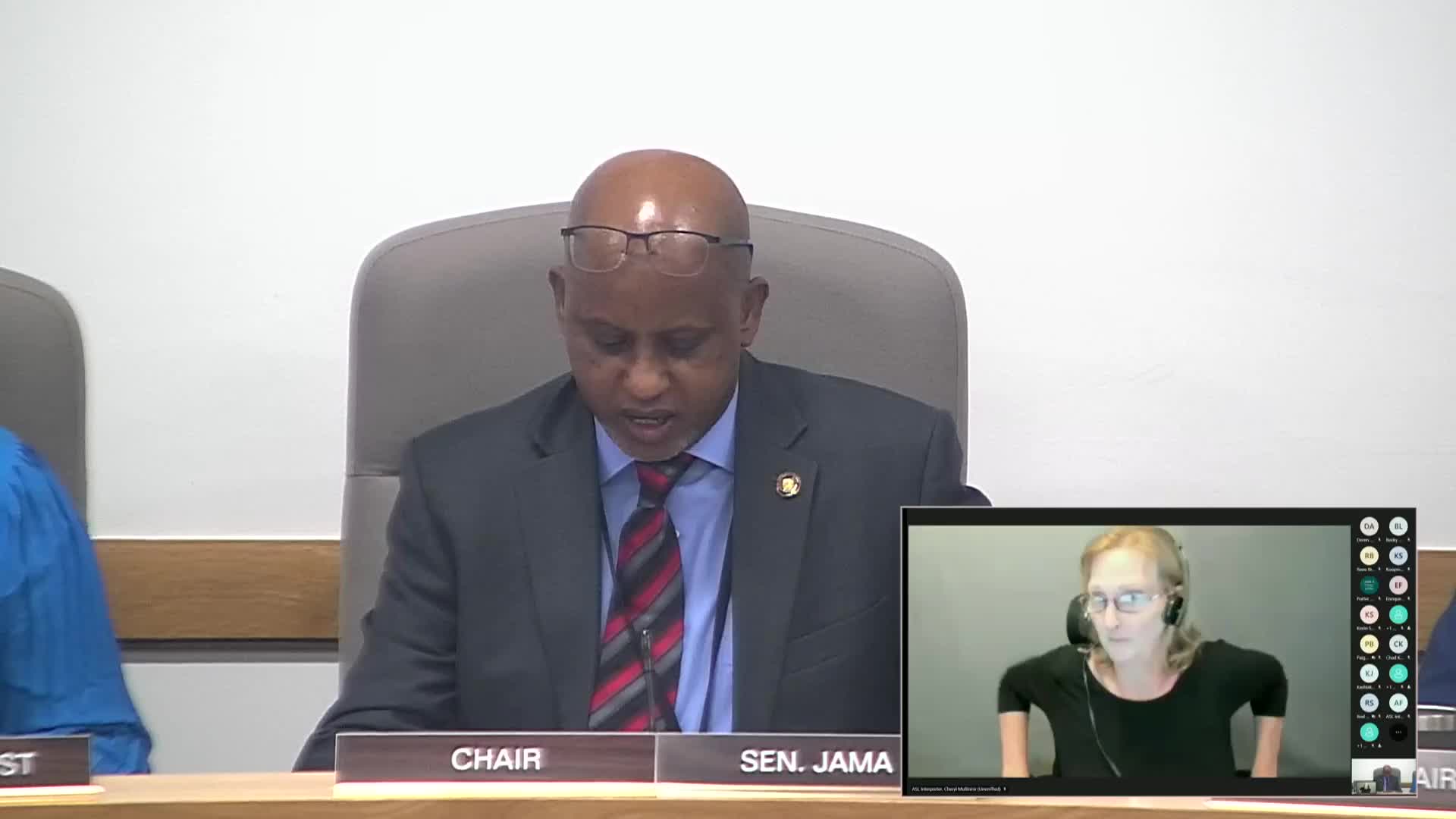
The committee held an extended public hearing that drew substantial testimony and written input. Committee staff reported more than 9,300 written testimonies submitted as of 9 a.m. the morning of the hearing; the chair told the committee that 81% of written testimony then was in opposition and 19% in favor. More than 160 people registered to speak in person; the chair allotted roughly one minute per speaker and said he would balance supporters and opponents and prioritize in‑person witnesses who traveled more than 100 miles.
Public testimony was deeply divided. Proponents — including many individual rural residents, precinct captains and grassroots organizers — argued for restoring what they described as the “gold standard” of in‑person voting, improving chain of custody and public confidence, and requiring photo ID to prevent fraud. Supporters included speakers referencing military service and long family traditions of in‑person voting and organizations and individuals who said they had experienced registration or ballot delivery problems.
Opponents included statewide civic, labor, and civil‑liberties organizations and many individual voters. The American Civil Liberties Union of Oregon, the League of Women Voters of Oregon, the National Vote at Home Institute, Oregon AFL‑CIO, AFSCME, SEIU 503, Unite Oregon, Family Forward, educators and union representatives all testified in opposition. They argued SB 2 10 would erect barriers for voters with disabilities, caregivers, working families, rural residents, older voters and people with limited transportation; that it would decrease turnout; and that removing prepaid postage would disproportionately burden low‑income voters. Many opponents described vote‑by‑mail as secure, with signature verification and audit processes, and urged the committee to protect the existing system rather than replace it.
Committee members and the sponsor discussed statutory mechanics and policy tradeoffs. Senators and representatives who spoke during the hearing emphasized the volume of submitted testimony and the strong differences in public views. At one point, the committee’s IT staff said a technical problem had left around 30 registrants without confirmation emails for the hearing; the chair acknowledged that some speakers could not join because of the issue and asked staff to follow up.
No formal committee action, amendment, or vote on SB 2 10 is recorded in the March 31 transcript. The public hearing was lengthy and managed to permit dozens of one‑minute testimonies under time constraints; the committee closed the hearing the same day.
Ending: SB 2 10 drew extensive testimony both for and against. The sponsor said the referral would let Oregonians decide whether to affirm vote‑by‑mail or restore in‑person, ID‑based voting. The committee received technical questions, high volumes of written testimony, and a mixture of organizational and individual views; the measure remained at the public‑hearing stage pending any committee action.