Get Full Government Meeting Transcripts, Videos, & Alerts Forever!
Get email alerts on the Education Budget topic
No spam. Unsubscribe anytime.
Scranton School District could gain up to $12.6 million if governor’s proposals hold; federal cuts would threaten about $20 million in programs
Summary
District staff outlined how Gov. Shapiro’s 2025 budget proposal would increase state funding for Scranton SD by about $10.7 million (potentially $12.6M with charter reform), while possible federal cuts — including threats to Title programs and school nutrition funding — could remove roughly $20 million in support.
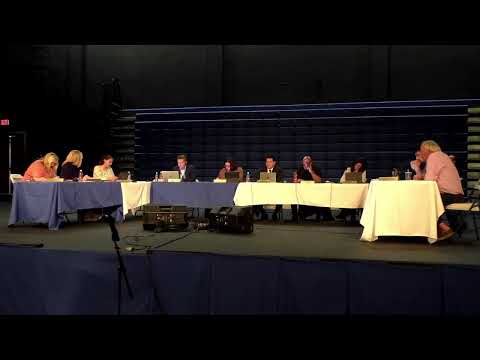
Scranton School District officials told the school board on March 31 that Governor Josh Shapiro’s February budget proposal would raise the district’s state funding but that possible federal reductions could substantially offset those gains.
Mister Laffey, presenting a state-budget summary, said the governor’s approximately $51 billion statewide proposal includes a $75 million increase to the Basic Education Fund, $40 million to special education, a $526 million increase to adequacy and equity supplements, $100 million for safety and security grants and $125 million for public school facilities improvement grants. "Our basic education would increase from approximately 73,900,000.0 to 74,900,000.0 or, or $1,100,000 in BEF," Laffey said.
The district’s Ready to Learn Block Grant would, according to Laffey, grow from roughly $17 million to about $26.2 million — a $9.2 million increase to the district under the proposal — and he summarized that the proposal would amount to roughly a $10.7 million increase in state funding for the district compared with 2024. Laffey also noted charter/cyber reform proposals could add an estimated $1.9 million for Scranton if adopted, bringing the district’s potential total increase to about $12.6 million.
At the same meeting, board members and staff flagged the vulnerability of federal funding streams. District staff reported roughly $12 million in federal sources flowing to the general fund and noted the National School Lunch Program provides about $7.4 million to the district. Staff counted more than 100 positions partially or fully funded by federal programs: "over 47 staff members funded through Title I," roughly four classroom-size reduction teachers funded by Title II, five or six English language development staff funded by Title III and about 29 teachers funded through IDEA, according to the presentation.
Mister Laffey said the district has heard informal reports of possible federal reductions — "word-of-mouth from various organizations" — including a potential 10% reduction in Title I and possible elimination of Titles II and III. He added the U.S. Department of Education issued a statement urging states to expand education choice by leveraging Title I flexibility.
Superintendent Doctor Keating and staff outlined the budget process timeline: the district prepares a preliminary budget (calendar-year budget) in the spring that is due in July, and federal allocations for titles typically arrive in mid to late May. Keating said staff are preparing multiple projections for the board that pair different federal and state outcomes with corresponding spending scenarios.
Board members asked about advocacy and engagement with state and federal legislators. Doctor Keating confirmed ongoing contact with local legislators and said she will meet in Washington, D.C., next week as part of a fellowship and will raise the district’s concerns with U.S. senators and representatives.
Why it matters: The district could see a mid‑seven figure increase in state support if the governor’s proposal survives budget negotiations, but substantial federal cuts would risk programs and staffing funded by federal titles and child nutrition reimbursements. The timing of federal allocations and the state budget process leaves the district preparing multi-scenario budgets between now and July.
Questions and next steps: Staff will continue cost-out projections tied to state and federal scenarios, report federal allocation numbers when they arrive in May, and communicate with the board about funding-dependent budget priorities such as preschool restoration and Ready to Learn allowable uses.