Get Full Government Meeting Transcripts, Videos, & Alerts Forever!
Get email alerts on the Homelessness Prevention topic
No spam. Unsubscribe anytime.
Committee hears bill to add state funds to federal rapid-rehousing program
Summary
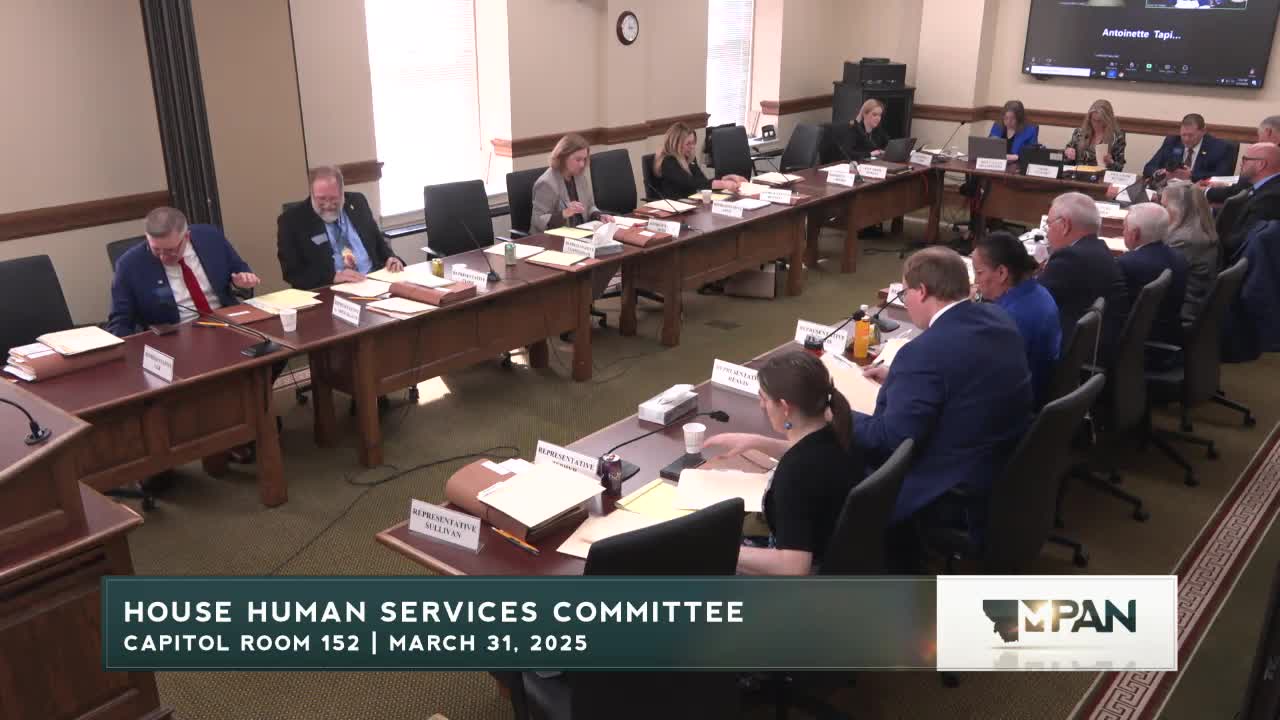
Representative S.J. Howell opened a hearing on House Bill 843, proposing state funds to supplement the federal Emergency Solutions Grant program to expand rapid rehousing and homelessness prevention in Montana.
Representative S.J. Howell, vice chair of the House Health and Human Services Committee, opened the public hearing on House Bill 843, which would provide state funds to supplement the federal Emergency Solutions Grant (ESG) program to expand homelessness prevention and rapid rehousing.
Howell said the bill would “appropriate $2,000,000 — 1 million dollars a year for the biennium” to supplement ESG funding from the U.S. Department of Housing and Urban Development. She told the committee Montana has seen steep increases in homelessness, citing a statewide point-in-time count that she said showed a 37.4% rise in individuals experiencing homelessness since 2022.
Supporters from nonprofit providers and community action agencies described how rapid rehousing funds are used for short- and medium-term rental assistance — for example, deposits, first month’s rent, rental arrears, utility payments and landlord engagement — and urged the Legislature to add a stable state funding source to stretch federal dollars and reach more people. Kathy Marks of Rocky Mountain Development Council told the committee ESG funds were used recently to place a senior who otherwise faced hotel living into an apartment by covering a deposit and first month’s rent. Hannah Altman of HRDC District 9 said the bill would allow use of assistance up to 150% of HUD fair market rent in areas where local rents exceed HUD limits.
Officials and service providers emphasized practical barriers the bill is targeted to address: limited federal funding that often cannot match current local rents, scarce rental inventory in rural counties, and long waits for housing vouchers or public housing. Multiple witnesses gave examples of how relatively small amounts of rental assistance can stabilize families and reduce use of emergency services. The department that manages ESG funding told the committee the state grants would supplement, not replace, federal ESG funds; the department also confirmed ESG formula grant amounts of about $744,418 in program year 2024 and $741,906 for program year 2025, as reported in testimony.
Committee members asked providers for estimates of the number of households the proposed funding could reach; proponents said local agencies have connected over 100 households in the past year across their grants and that the additional funds would increase capacity and allow prioritizing prevention.
The hearing closed with no committee vote recorded.
Ending: The bill will move through the committee process; no action was taken at the hearing and no committee motion or vote was recorded.