Get Full Government Meeting Transcripts, Videos, & Alerts Forever!
Get email alerts on the Public Safety Staffing topic
No spam. Unsubscribe anytime.
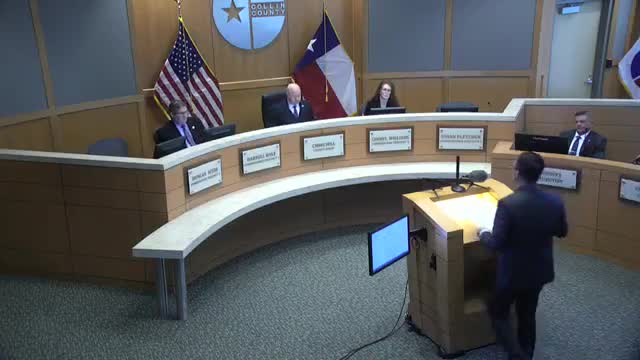
Collin County adopts new jail staffing relief‑factor policy over sheriff’s objection; measure passes 2‑1
Summary
Commissioners voted 2‑1 to adopt a policy standardized by administrative services for calculating the jail staffing "relief factor." The sheriff urged inclusion of comp time in the calculation, saying exclusion would undercount staffing needs; commissioners approved the policy as presented despite those concerns.
The Collin County Commissioners Court voted to adopt a new policy setting how the county calculates the detention facility staffing "relief factor," a measure used to estimate how many employees are needed to cover posts while accounting for training, leave and overtime. The motion passed 2–1 following debate over whether accrued compensatory time should be counted in the calculation.
County Administrator Eun Kim and administrative services staff presented the policy, which standardizes net annual working‑hours calculations and the resulting relief factor used for budgeting jail posts. Budget Director Monica Arris had earlier briefed the court on FY2026 budget deadlines and packet submissions; the relief‑factor discussion was placed before the budget deadlines to allow departments to include consistent staffing assumptions.
Administrative services told the court the working‑group methodology yields a relief factor of about 4.97 for detention officers working 12‑hour shifts under the FY2026 assumptions. Kim described categories used in the calculation and said the policy assumes a high use of accrued paid time off in order to remain conservative; the working group also identified temporary duty posts the sheriff’s office uses now that the group recommended be filled permanently.
Sheriff Skinner told the court he supports stronger staffing but objected to how the proposal treated compensatory time. He cited the National Institute of Corrections’ recommendation to include comp time in staffing analyses and said the county’s methodology understates need by excluding some comp‑time calculations. “When I looked at [the proposal] … their recommendation is that you include comp time in the analysis,” he said, and added, “currently I have 49,000 hours of accrued comp time at the sheriff's office.” He said including the 63 hours of premium comp time used in prior models would raise the relief factor to about 5.12 and increase the estimated force by nine detention officers (from about 359 to about 368 under the county’s spreadsheet example).
Commissioners pressed staff about comp‑time balances and options for addressing high comp balances without immediately adding staff. Administrative services said options include hiring the additional positions the relief factor indicates or adjusting the relief factor with documented assumptions; the working group also flagged several temporary posts that should become permanent. Commissioners also discussed training‑hours assumptions, overtime treatment and how shift patterns affect the final numbers.
Commissioner Williams moved to approve the policy as presented; the motion passed 2–1. The public record and minutes did not record named roll‑call votes for each commissioner in the transcript. The court did not adopt any immediate new hires at the meeting; the policy provides a consistent methodology for budget submissions and for future staffing requests.