Get Full Government Meeting Transcripts, Videos, & Alerts Forever!
Get email alerts on the Municipal Audit topic
No spam. Unsubscribe anytime.
Syracuse auditors issue unmodified opinion on financial statements but flag material weakness, grant and procurement problems
Summary
Bonadio LLP gave Syracuse City an unmodified opinion on its June 30, 2024 financial statements but reported a material weakness in internal control, a modified compliance opinion for the HOME program, gaps in CHIPS reimbursements, and procurement documentation deficiencies.
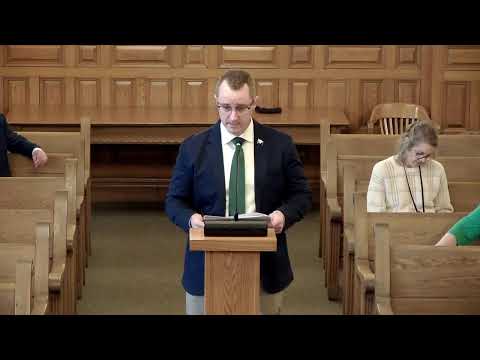
Bonadio LLP told the Syracuse City Council’s audit committee on March 31 that it would issue an unmodified opinion on the City’s financial statements for the year ended June 30, 2024, but the firm identified a material weakness in internal control and several significant deficiencies affecting grant reporting and procurement.
The audit partner, Greg Evans of Bonadio LLP, said the auditors’ “opinion is, we believe they’re fairly stated in all material respects.” He also told the committee, “we do have that material weakness” after auditors proposed several year-end adjustments that the City accepted.
The audit team said the material weakness largely resulted from multiple audit adjustments recorded after year end. The City’s Commissioner of Finance, Mike Hennessy, told the committee these adjustments amounted to roughly $2 million in under-recorded expenditures, primarily related to workers’ compensation accounting after a change in providers and a $600,000 prepayment that had been recorded as an expense instead of a prepayment.
Bonadio reported approximately 1,100 hours devoted to the audit. The auditors also described operational slowdowns that delayed completion: the Schedule of Expenditures of Federal Awards (CIFA) did not have a final number until Dec. 11, 2024, requiring the auditors to adjust planning and potentially the scope of the single-audit testing.
Fiscal and fund-balance highlights presented to the committee showed Syracuse’s unassigned fund balance rose to about $112 million at June 30, 2024, equal to an estimated 45–50% of annual expenditures. The City had budgeted to use $23 million of fund balance but used about $4 million, producing a $19 million favorable variance for the fiscal year. The report also noted the Syracuse City School District’s results were included in the combined statements: the district anticipated using $8 million but increased fund balance by $35 million — a $43 million swing.
The single-audit portion produced a modified compliance opinion for the HOME Investment Partnerships Program (HOME). Bonadio cited failures in required inspection and recordkeeping for HOME-assisted rental units; because the compliance requirement from the uniform guidance could not be tested as required, the auditors modified the compliance opinion for that program. The auditors said the issue did not produce questioned costs in the year under audit but did constitute a reportable compliance failure.
Grant-management and capital-project accounting problems were highlighted. Auditors described a complex, manually maintained spreadsheet used to calculate entitled grant receivables on multi-year capital projects; errors in that reconciliation contributed to findings. The report said state Department of Transportation–related capital expenditures totaled just under $15 million in 2024, but the City could document only about $9.8 million of those amounts as currently claimable for reimbursement, leaving an apparent gap of roughly $5 million.
Committee members pressed on the consequences. Evans and Hennessy said delayed or missing reimbursements require the general fund to temporarily carry capital projects and could create cash-flow pressure; Bonadio noted the City had previously faced a near-withdrawal of funds when an item was omitted from the CIFA and had to reissue the report to preserve funding.
Procurement and documentation retention practices drew separate findings. The auditors identified instances where competitive bidding or an RFQ/RFP process was waived without adequate documentary rationale for the waiver. Bonadio recommended a standardized waiver checklist and better record retention — especially digital retention of RFP responses and sole-source justifications — to strengthen internal controls. Council members raised the administrative time for issuing an RFP (estimated at about three months) and said the City is working to standardize procurement through an OpenGov platform.
Highway planning and construction (CHIPS) reimbursements also were a focus. Bonadio told the committee the City is likely 12 to 15 months behind in CHIPS reimbursement submissions and must submit an upcoming claim on May 23, 2025, to include eligible calendar‑year‑2024 expenditures. Auditors and staff quantified the potential exposure at roughly $5 million if eligible reimbursements cannot be supported in time. The audit team said CHIPS now runs at about $15.5–16 million annually, up from earlier program amounts, but staffing and reporting had not scaled with that increase.
Committee discussion emphasized the citywide nature of many findings. Commissioner Hennessy reminded councilors that “this is an audit of the City” — meaning issues involve multiple departments (finance, public works, codes, etc.) and are not solely a finance-department problem. Committee members and auditors identified turnover, reliance on manual Excel processes extracted from PeopleSoft, and historically decentralized recordkeeping as drivers of the control weaknesses.
The auditors also flagged an upcoming accounting standard (GASB pronouncements related to compensated absences, cited briefly as an upcoming standard for the 2025 financial statements) that will change how accrual estimates for sick and vacation time are calculated but said it was not expected to materially change the City’s reported position for 2025.
The audit team offered recommendations including: improved month‑end and project reporting to departments; a documented waiver process for sole‑source or emergency procurements; better documentation retention and digital recordkeeping; and corrective actions on grant reconciliation and HOME inspection logs to prevent recurrence.
The committee acknowledged the breadth of findings and discussed capacity constraints in the finance office. Hennessy and auditors said addressing the recommendations will require more staff time, standardized procedures, and improved reporting tools to reduce manual reconciliation work and support timely federal and state reimbursements.
A motion to adjourn was made and seconded at the session’s close; no roll-call vote was recorded shortly thereafter.