Get Full Government Meeting Transcripts, Videos, & Alerts Forever!
Get email alerts on the Courthouse Security Upgrade topic
No spam. Unsubscribe anytime.
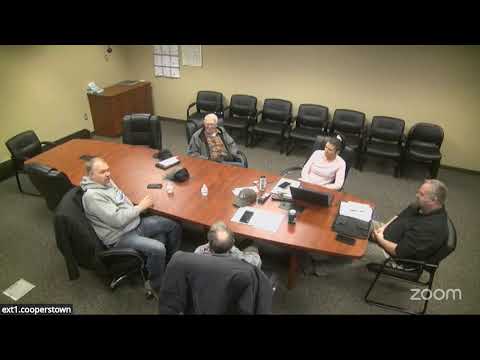
Griggs County Commission approves courthouse security upgrade using federal ARPA funds
Summary
The commission approved a courthouse security upgrade covering cameras, door fobs/badges and related network and phone upgrades. The project budget cited roughly $190,000 before a $40,000 grant; commissioners approved the plan by voice vote after discussion about funding sources and public concern.
The Griggs County Commission voted on March 31 to approve a courthouse security upgrade that includes security cameras, electronic access (fobs and ID badges), rekeying, and related fiber/phone upgrades. The motion passed by voice vote with one recorded no.
Commissioner Edlin moved to approve the security system; Commissioner Allison seconded. During the voice vote Commissioner Zorn voted “no,” and Commissioners Ellison, Edlin and Tranvi voted “yes”; the chair announced the motion carried.
County staff and the presenter described the project scope and funding during a detailed discussion. The presenter, identified in the transcript as Mr. Palm, said the county had seen small price increases on equipment and cautioned about possible tariffs. He said the current estimate for the courthouse security scope was approximately $190,000 and noted the figure did not yet account for an awarded grant. “What the new total I got is $186,406 and that does not include the grant,” Mr. Palm told commissioners; staff and commissioners then confirmed a $40,000 grant would reduce the county’s net cost.
County staff identified the additional funding sources available for the project as SLFRF (State and Local Fiscal Recovery Funds) under the American Rescue Plan Act (ARPA). One staff member reported $18,744 had already been budgeted in the IT line for cameras. Commissioners discussed that after applying the $40,000 grant and existing budget items the remaining county-funded portion would be lower; a staff estimate cited a net balance of about $138,000 after the grant.
The approved scope includes electronic access for approximately 44 doors, issuance of ID badges or dual-purpose fobs, automatic scheduling to lock and unlock doors by time of day, the ability to issue credentials to phones where supported, and activity logs for access events. County staff said the sheriff’s department would be the primary manager of security permissions, with department heads able to set role-based access and the commission stepping in for conflicts.
Supporters said the badge/fob system would simplify rekeying and access control: “If an employee leaves and they don't hand in their keys, we're supposed to rekey everything... What's nice here with the fob, if they leave, we just deactivate the fob and they're done,” a staff member said on the record. Commissioners also discussed options such as buzzers for visitor control and the ability to override automatic schedules for special events (for example, elections or evening meetings).
A small number of residents had contacted commissioners with concerns about spending federal funds in a small community. Commissioner Grama noted those contacts and said some residents misunderstood the source of funds; several commissioners clarified on the record that the money being used was federal SLFRF/ARPA funding and not a new property-tax assessment. One commissioner observed that while the funds are federal grants, “it is still taxpayer money,” a point the transcript records explicitly.
After the vote, staff said the vendor(s) will generate sales orders and the county will follow its standard contracting and signature procedures. Commissioners directed staff to proceed with vendor paperwork and to return if any additional commission signatures or approvals were required for individual vendor contracts.
The commission’s approval marks the project’s authorization to proceed; vendors and staff will complete final procurement and scheduling steps.