Get Full Government Meeting Transcripts, Videos, & Alerts Forever!
Get email alerts on the Local Budget topic
No spam. Unsubscribe anytime.
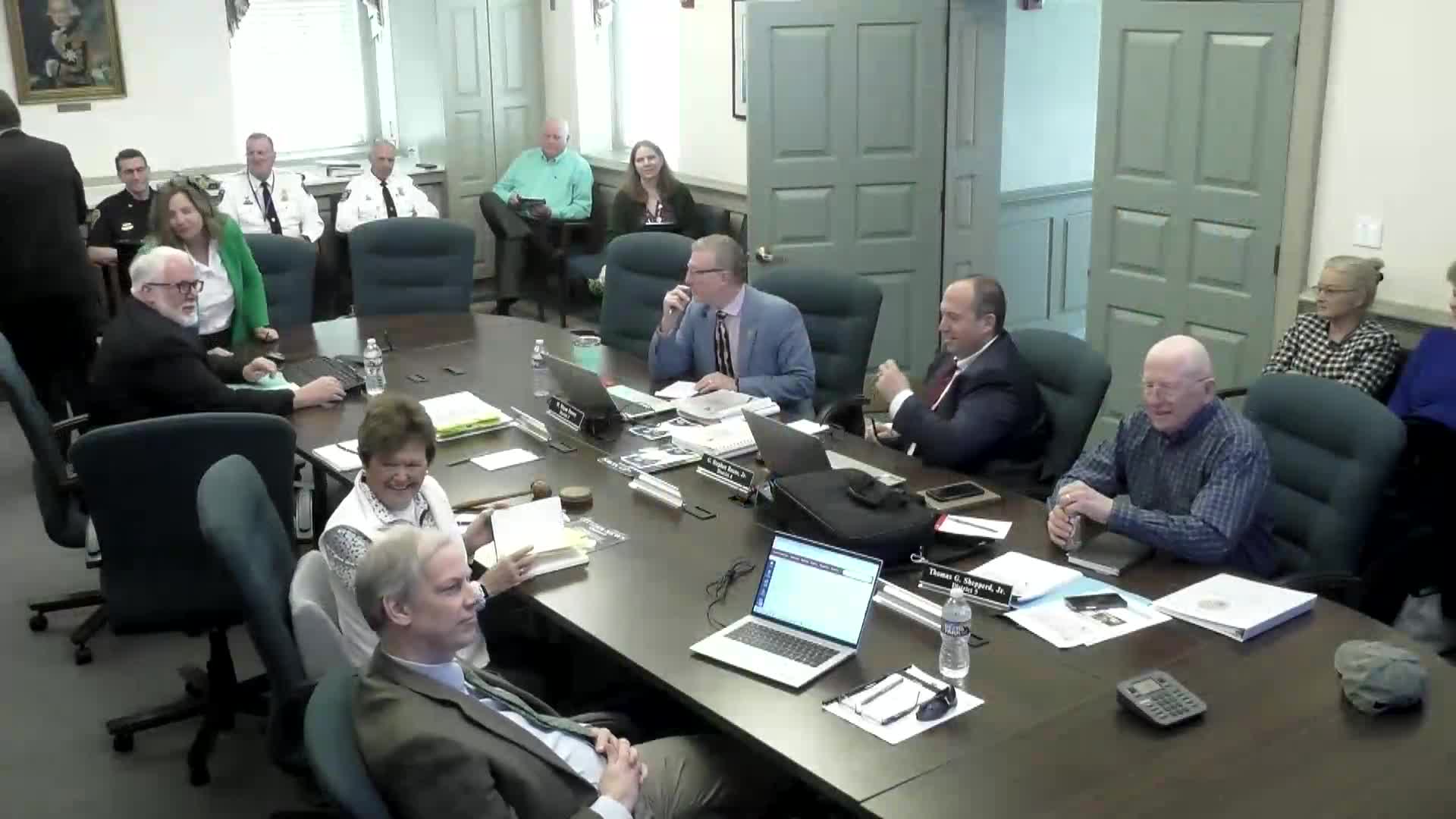
York County administrators outline proposed tax‑rate increase, possible cuts and CIP tradeoffs
Summary
County staff presented a proposed operating and capital budget that includes a proposed 78¢ real‑estate tax rate and several cut scenarios tied to incremental tax‑rate reductions; supervisors asked for detail on which CIP and operating items would be delayed or cut to achieve half‑cent to two‑cent reductions.
York County administrators told the Board of Supervisors on March 27 that their recommended budget includes a proposed real‑estate tax rate that would raise county revenues to cover operating needs and capital projects, but they also provided supervisors with incremental options for reducing the proposed rate by half a cent up to two cents and identified the program and CIP consequences for each step.
County administrators described a multistage process of internal review and reductions that produced the current CIP and operating budget recommendations. The county administrator said senior staff and department teams had already trimmed requests through a combination of scope reductions and timing shifts and then presented to the board a series of additional options for elected supervisors to consider if they seek to lower the proposed tax rate.
"These are not my recommendations," the county administrator told the board when presenting the list of potential cuts. "I think the right budget is the one you saw on the eighteenth," he said, noting that the options had been prepared at the board's request so supervisors could see tradeoffs.
What was presented and why it matters County staff summarized previously made reductions (roughly $40 million of combined county and school‑side CIP reductions and additional operating reductions) and then presented incremental operating‑and‑CIP reductions that would align to tax‑rate actions. Examples included: - Half‑cent reduction: staff suggested a set of cuts and timing changes equal to the revenue impact of a half‑cent drop, including a grounds‑maintenance reduction, removal of library e‑book funding, and recharacterizing a Riverwalk stage cash purchase to debt financing to move cost off the FY‑26 cash budget. Staff cautioned that some cuts would reduce immediate services or planning capacity. - One‑cent, 1.5‑cent and two‑cent scenarios: further reductions would add impacts such as increasing the regional radio life‑cycle contribution from $120,000 to $500,000 (a budgeting choice supervisors discussed), deferring Charles Brown Park master planning cash, trimming the economic‑development grant pool, and cutting operations in Fire & Life Safety and the sheriff's office (presentations listed example operational reductions in the low‑hundred‑thousand ranges per department for higher cuts).
County staff emphasized that operating reductions would affect largely people‑based budgets (public safety and public works are large operating cost centers) and that CIP reductions or delays push capital needs into future years rather than eliminating them. The county administration noted that the CIP had already been trimmed in several places through scope changes, delayed starts and other reductions prior to the board retreat and work sessions.
Tax burden context Finance staff presented a chart comparing York County's proposed tax burden (real‑estate tax as a share of median household income) to neighboring jurisdictions. The county administrator and finance staff argued that although York County's headline tax rate is often characterized as low, the combined tax burden (rate multiplied by home value relative to income) must be considered. One finance slide showed York's proposed annual tax on a hypothetical median property and compared tax burden metrics across the region; staff observed that York remains comparatively moderate on tax burden measures after the proposed rate.
Public‑facing impacts and next steps Presenters told supervisors that some items could be moved from cash to debt to smooth the fiscal year impact (such as converting the Riverwalk stage purchase from cash to debt), while other items would directly reduce service or grant programs. Staff also flagged that earlier CIP and operating reductions already removed or delayed projects totaling tens of millions of dollars from earlier requests.
No formal vote recorded The board did not adopt a rate during the session; administrators said the figures and scenarios were presented to guide the board as it considers further refinements before adopting a budget and CIP in May.
Ending County administrators asked supervisors for guidance on which tradeoffs they prefer and said staff will prepare detailed line‑item impacts for any cuts the board requests so the supervisors can set a final tax rate and adopt the FY‑26 budget in the coming months.