Get Full Government Meeting Transcripts, Videos, & Alerts Forever!
Get email alerts on the Tobacco Buffer Zones topic
No spam. Unsubscribe anytime.
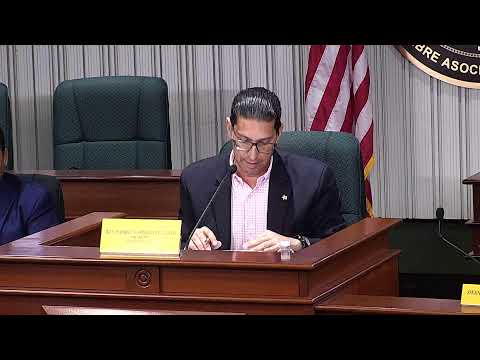
Puerto Rico health committee hears testimony to expand smoke-free perimeters around schools, hospitals and recreational sites
Summary
The House Committee on Health met Friday afternoon to consider two measures that would expand Puerto Rico tobacco-free buffer zones: House Bill 175 (Torres Zamora) and House Bill 201 (Swanny Vargas Laureano), both aiming to amend Law 40 of 1993 to add exterior no-smoking perimeters around schools, hospitals and recreational facilities.
The House Committee on Health met Friday afternoon to consider two measures that would expand Puerto Rico tobacco-free buffer zones: House Bill 175, filed by the New Progressive Party spokesman Torres Zamora, and House Bill 201, filed by Representative Swanny Vargas Laureano. Both would amend Law 40 of 1993 (the island of Puerto Rico) to extend prohibitions on smoking around schools, healthcare facilities and recreational sites.
Why it matters: committee members and testimony emphasized protecting children, patients and other vulnerable populations from secondhand smoke and modern nicotine delivery devices. Agencies proposed a single, uniform perimeter to reduce enforcement confusion and recommended amending the bills to specify metric measurements and to identify funding and implementation steps.
Most significant testimony and recommendations
- Department of Education: Sara Ruiz Maisonet (director of public policy), speaking for the department, told the committee the proposals would extend protections to students and school visitors and endorsed the bills as "a step to protect our students and vulnerable populations." The department said the measures would complement school-based socioemotional prevention work and urged the committee to adopt them.
- Department of Health: Luis Reyes Burgos (identified in the record as an analyst in the Secretariat for Integral Health Services) summarized scientific and policy precedent, noting that jurisdictions in the U.S. have set exterior buffer distances ranging from 10 to 25 feet and that the U.S. Department of Housing and Urban Development required smoke-free policies around public housing in 2016. The Health Department recommended a uniform perimeter of 20 meters (about 60 feet) from building entrances and exits as a "prudent" standard and urged that any enactment include an appropriation for recurring implementation costs. The department also said implementation would be subject to availability of fiscal resources and reported it has about 125 inspectors who carry out related enforcement and permitting work.
- Department of Recreation and Sports: Miguel Laureano (subsecretary) testified that the department supports extending protections to recreational and sports facilities, including government-run recreational sites used by children and youth, and recommended guidance and transition mechanisms for public and private operators so they can comply with any new rules.
- Association of Hospitals of Puerto Rico: Pedro J. Gonzalez (vice president and CEO) told the committee the association supports House Bill 175 and highlighted the risk secondhand smoke poses to patients, visitors and health-care workers. The association pointed to research on secondhand smoke and said the proposed rules would help hospitals meet clinical goals and reduce preventable illness; the association specifically cited a perimeter of "two hundred meters" around hospitals as part of its presentation, noting there is variation in the draft language under discussion.
Key issues raised by committee members and staff
- Units and uniformity: committee members and witnesses repeatedly noted inconsistent units in the two bills (feet vs. meters). Committee leadership said they prefer metric language and directed sponsors to amend the drafts to use meters to avoid confusion.
- Distance for schools and recreation areas: several members, including Representative Fernando Sanabria Coln and Representative Odalis Gonzlez Gonzlez, said greater distances from schools are preferable to reduce modeling and exposure among children. The bills as drafted propose varying distances (examples discussed at the hearing included 20 meters, 50 feet, 100 feet and 200 meters), and members asked staff to propose a single, uniform distance that could be used across settings.
- Implementation funding and enforcement: speakers from the Department of Health requested that any final law include recurring funds for signage and implementation and noted enforcement depends on existing inspector capacity and permitting processes. The committee asked the Justice Department for a formal legal opinion about the scope of authority (public ways, municipal ordinances and private property limits) before finalizing language.
Committee directions and next steps
During the hearing the committee agreed on three near-term actions: the Health Department will provide the studies that informed its recommendation (the committee asked for those studies to be submitted within five working days); the committee will request a legal opinion from the Department of Justice about the reach of perimeter restrictions in public ways and private property; and the sponsor and committee leadership signaled they will amend the bills to use metric distances and to harmonize perimeters across the measures. No vote was taken at the hearing.
What the bills would change
- House Bill 175 (Torres Zamora): proposes amendments to Law 40 of 1993 to extend no-smoking rules around healthcare facilities, hospitals and certain public spaces (draft distances discussed during testimony ranged widely; final language to be amended). The Association of Hospitals emphasized protections for hospitals and related treatment centers.
- House Bill 201 (Representative Swanny Vargas Laureano): focuses on schools and educational settings and would prohibit designation of on-campus smoking areas at educational institutions; the Department of Health recommended extending that prohibition to include universities and other institutions of higher education.
Context and background
Puerto Rico established a comprehensive indoor smoking ban in Law 40 of 1993, which several municipalities have since enforced with stricter local ordinances. Witnesses cited Law 66 of 2006 and municipal ordinances that set a range of perimeters (commonly 20feet/6m to 75 feet/23m) and noted federal HUD guidance in 2016 requiring smoke-free indoor policies for public housing agencies.
Ending note
The committee closed the public hearing after receiving testimony and agreed to incorporate the Health Department recommendations into proposed amendments and to await the Justice Department opinion and the Health Department studies before scheduling a markup or vote.