Get Full Government Meeting Transcripts, Videos, & Alerts Forever!
Get email alerts on the Wrongful Conviction Compensation topic
No spam. Unsubscribe anytime.
Innocence Project, exonerees press Judiciary Committee on compensation process and pre-settlement loan oversight
Summary
Advocates and exonerees testified March 28 before the Judiciary Committee urging statutory clarifications on exoneree compensation and tighter oversight of pre-settlement loans as the committee considers awards and related bills.
HARTFORD — Advocates for wrongfully convicted people and several exonerees testified to the General Assembly Judiciary Committee on March 28, urging lawmakers to clarify the state’s process for approving exoneree compensation and to require public reporting and safeguards for pre-settlement loans that many exonerees use after release.
The testimony focused on two bills before the committee — HB 7251 and SB 1544 — and on several awards recommended by the claims commissioner that the committee is invited to confirm. Amanda Walwin, a state policy advocate with the Innocence Project, told the panel the nonprofit supports HB 7251 because it “clarifies and streamlines the process ensuring everyone is on the same page” and supports SB 1544 “which will require reporting on pre settlement loans for exonerees.”
The bills and awards matter because exonerees often face immediate financial needs after release, witnesses said. Walwin described the loans as “a critical lifeline toward rebuilding their lives” for some clients, but warned that the contracts can be opaque and potentially exploitative. She asked legislators to consider whether state support or a regulated mechanism would reduce reliance on private loans.
“We are hopeful that the changes made under SB 439 will reduce the need for these loans in the future,” Walwin said, referring to prior legislation she said improved Connecticut’s statutory framework for exoneree compensation.
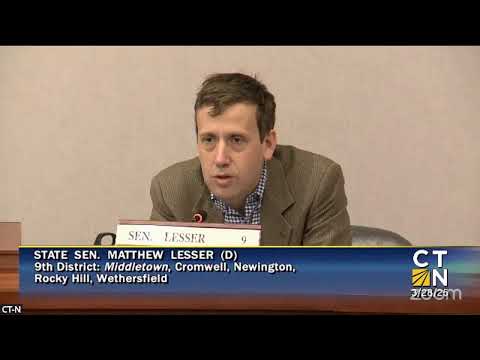
Panel members asked about the uses and risks of the loans. Senator Derek Slap (the transcript records the questioner as Senator Winfield) pressed for recommendations on an overall model for post-release supports; Walwin answered there is no single state model she could point to, but recommended a combined approach of services and immediate cash assistance. Representative Fishbein asked whether loans are used for basic expenses; Walwin said they are used both for day-to-day needs and for larger reentry expenses such as transportation and housing.
The hearing also included attorneys and advocates seeking confirmation of awards for individual exonerees. Attorney David Keenan and others urged approval of awards for clients including Adam Carmen, who served 29 years in prison, and Richard LaPointe, who served 26 years, describing longterm harms and the difficulty exonerees face rebuilding their lives. Counsel for claimants and the attorney general’s office described negotiation and review processes for arriving at award figures.
Committee members asked how the statutory compensation baseline is calculated and how discretionary increases are determined. Representative Fishbein queried the process surrounding baseline calculations under the newly enacted wrongful-incarceration statute (transcript referenced the statute in shorthand as "54 1 0 2 u u"). Attorney representatives told the committee that claim and award calculations typically rest on expert economic reports that are exchanged and vetted as part of negotiation and the claims-commissioner hearing process. Counsel for the state said awards and any discretionary increases are negotiated and reviewed within the attorney general’s office before coming to the commissioner.
Several exonerees and family members spoke in support of confirmation of awards and of the bills to regulate loans. Adam Carmen, who attended, was described by his counsel as having been wrongfully imprisoned for nearly three decades; counsel said the award under consideration reflects duration of incarceration and severe reputational harms associated with the underlying charges.
The committee did not act on any awards or bills during the hearing. Witnesses said they would continue to work with legislators on statutory language and timelines aimed at reducing reliance on private loans and improving the clarity of the claims-commissioner process.
Context: Pending bills and awards
HB 7251 — described to the committee as clarifying and streamlining claims-commissioner procedures for exoneree compensation and related filings.
SB 1544 — described to the committee as requiring reporting on pre-settlement loans to allow public oversight and to reduce potential exploitation of exonerees.
At this hearing, counsel also discussed awards recommended by the claims commissioner for multiple exonerees; the awards and some of the supporting economic calculations were discussed with committee members but not voted on.
Looking ahead: Sponsors and advocates said they will continue to refine statutory language and discuss the loan-reporting requirements with stakeholders to ensure protections for exonerees and transparency for the public.