Get Full Government Meeting Transcripts, Videos, & Alerts Forever!
Get email alerts on the Zoning topic
No spam. Unsubscribe anytime.
Grand Island board hears update on M1 law, zoning committee and moratorium expiration
Summary
Members were told the town's building moratorium has expired, the zoning rewrite committee is drafting recommendations on the M1 (industrial) law, and the advisory board was invited to submit conservation-focused changes.
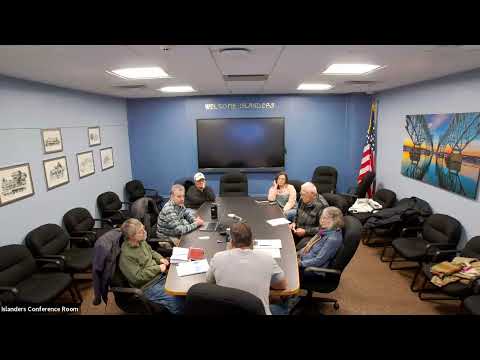
At its March 27, 2025 meeting, the Grand Island Conservation Advisory Board received an update that the town's temporary building moratorium has expired and that a zoning rewrite committee is preparing recommendations on the M1 industrial zoning law.
A board member said she had reintroduced the —M1' law for review and that the committee has returned an initial recommendation but will circulate a clarified proposal at its next meeting. The member characterized the committee as broadening its scope to review much of the zoning code and said the next recommendation should arrive in April.
Members discussed a long-standing local dispute over how to set size limits under the M1 designation. The older draft referenced a range ("75 to 150" in the transcript) for allowable square footage, which several members called ambiguous and urged be replaced by a single maximum figure. One board member suggested not exceeding 250,000 square feet for industrial structures; the transcript records debate about whether the appropriate cap should be approximately 150,000 square feet or higher.
Board members also raised wetlands and density issues tied to zoning. The transcript quotes a member noting that new wetlands rules have become more stringent and that the town contains extensive wetland areas that affect what can be built under revised zoning.
Members urged colleagues to review proposed changes and to consider submitting conservation-oriented recommendations to the zoning committee. Sue, identified in the meeting record as a CAB member, suggested it would make sense to have a CAB representative attend or be assigned to the committee; the group discussed attending open meetings and forwarding specific suggestions to the committee chair, Jim Sharp. The transcript indicates Jim Sharp is chairing the zoning rewrite effort.
No formal vote on zoning changes took place at the CAB meeting; the update was informational and intended to prepare the board for future input to the town board once the committee finalizes proposals.