Get Full Government Meeting Transcripts, Videos, & Alerts Forever!
Get email alerts on the Transportation topic
No spam. Unsubscribe anytime.
Town and county leaders discuss joint advocacy, transportation priorities and better coordination with DOT
Summary
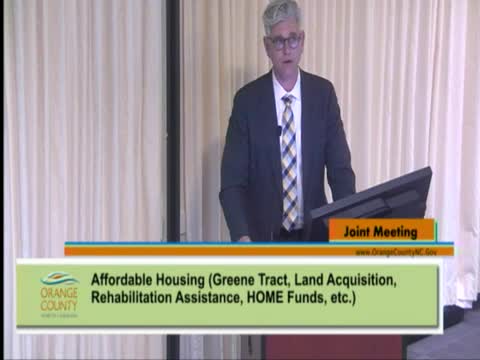
Carrboro council members and Orange County commissioners discussed joint priorities including affordable housing and transportation safety, urged closer coordination on project submissions and suggested more frequent touchpoints to align municipal and county advocacy.
Elected officials used the meeting’s concluding discussion to identify areas for joint advocacy and closer coordination between municipal and county decision‑makers, focusing on affordable housing policy and transportation safety project delivery.
Council Member Catherine Frey and other Carrboro officials urged the county and towns to coordinate on transportation applications and project priorities, citing missed opportunities if municipal and county submissions are not aligned. Council members said some safety projects (crosswalks, speed limit changes, shoulder widening) may require direct engagement with the North Carolina Department of Transportation (NCDOT) and regional MPO processes.
Why it matters: municipalities and the county compete for finite state and federal transport funds; coordinated submissions and shared project priorities can improve the chance of funding and speed project delivery.
Participants discussed options for better coordination: increased staff‑level integration, shared briefings to elected bodies or joint work sessions on focused topics, and using established DOT/Division engineers and scheduled DOT briefings as leverage points. Commissioner Earl (surname on transcript) urged direct contact with the NCDOT division engineer and noted that county‑level backing at DOT meetings can move projects such as stoplights and speed‑limit adjustments more quickly than individual emails.
Several officials proposed modest near‑term steps: county staff to provide vulnerability dashboards for federal funding risks (as discussed in the budget presentation), transportation staff to coordinate with municipal applicants on upcoming grant windows, and more frequent joint touchpoints (work sessions or staff briefings) to review a short list of shared priorities before the next major funding cycle.
No formal joint motion or vote was taken; officials asked staff to follow up on processes for coordination and to return proposals for how to structure future joint meetings or work sessions.