Get Full Government Meeting Transcripts, Videos, & Alerts Forever!
Get email alerts on the Criminal Procedure topic
No spam. Unsubscribe anytime.
Utah Court of Appeals hears arguments in State v. Millett on juror bias and vehicle search
Summary
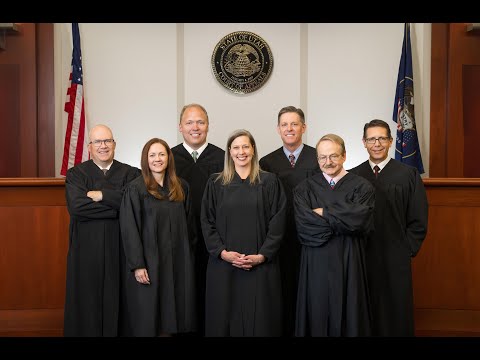
PRICE, Utah — The Utah Court of Appeals on Monday heard oral arguments in State v. Millett, No. 20230449, where the defendant challenges the trial court's handling of jury selection in a small-town venire and a motion to suppress evidence recovered from a vehicle.
PRICE, Utah — The Utah Court of Appeals on Monday heard oral arguments in State v. Millett, No. 20230449, where the defendant challenges the trial court's handling of jury selection in a small-town venire and a motion to suppress evidence recovered from a vehicle.
At issue before the three-judge panel were two discrete claims: that the trial judge abused discretion by refusing to strike three prospective jurors for cause in a reduced jury pool, and that the court erred in admitting evidence from the defendant's vehicle after officers questioned him and then retrieved items from the car.
The question matters because, if the appeals court finds the trial court erred on either ground, the convictions could be reversed or remanded for a new trial. Defense counsel argued the combination of a thin jury pool and close social ties between jurors and investigating officers denied the defendant a fair jury. The state responded that the record does not support those claims and that procedural safeguards and established case law support the trial court's rulings.
Andrew Fitzgerald, attorney for the defendant, told the panel that the jury selection process in the underlying trial was compromised when multiple prospective jurors knew or socialized with investigating officers and the venire was already small because of no-shows. "The relationship was too close," Fitzgerald said, summarizing his argument that the judge's on-the-record rehabilitation of those jurors was insufficient and that the judge should have continued the trial to obtain a larger pool.
Fitzgerald pointed to three jurors identified in the transcript as Peterson, Jacobson and Reid and said the record shows close ties: shared hobbies, visits to each other's homes and social interactions involving officers and witnesses. Fitzgerald also noted the transcript contains references to an off-the-record chambers discussion about the jury pool and argued there was no formal, on-the-record motion to continue to expand the venire.
The panel questioned whether a formal motion to continue was ever placed on the record. A judge on the panel observed that what appears in the transcript is the attorneys' summary of an unrecorded chambers discussion; the court pressed defense counsel whether a contemporaneous, on-the-record motion to continue was made, and Fitzgerald acknowledged it was not: "We don't have that formal motion that you would really want to look for where it was made on the record." (Andrew Fitzgerald, defense counsel.)
Jeff Mann, appearing for the State of Utah, disputed Fitzgerald's characterization of the jurors' ties. "The record does not say 'best friend,'" Mann told the panel, saying the transcript records acquaintanceship and shared hobbies rather than the close familial or social bonds that the defense described. Mann argued the district court had discretion to find the jurors sufficiently rehabilitated when each said on the record that they could be fair and impartial.
Several members of the panel explored the tension that arises in small jurisdictions between permitting deference to the trial judge's firsthand assessment of juror credibility and ensuring the defendant receives an impartial jury. One judge noted the high level of deference appellate courts give to trial judges, who can observe demeanor and tone, and asked what additional showing would have been required to demonstrate abuse of discretion.
On the suppression issue, the court considered whether statements and subsequent evidence recovered from the vehicle should have been excluded. The district court's findings, quoted during argument, include a description of a dashcam recording in which an officer asks the defendant about weapons and the defendant replies that a gun is under the seat and "there's needles in the door." Counsel debated whether those answers were the product of custodial questioning requiring Miranda warnings or instead fell within the public-safety exception recognized in Quarles and related authority.
Fitzgerald told the panel he regarded the encounter as custodial and argued a Miranda warning was required before officers elicited statements that led to searching the car. He also disputed the district court's application of the inevitable-discovery doctrine and the vehicle inventory rationale, saying the record did not establish that impoundment and an inventory search were unavoidable under local circumstances.
Mann maintained that the questioning about weapons and needles was a permissible officer-safety inquiry and relied in part on Tenth Circuit authority (cited in briefing as United States v. Lackey) applying Quarles' public-safety reasoning. He also pointed to the district court's factual finding that both vehicle occupants would have been arrested and that the vehicle would have been inventoried pursuant to local policy after impoundment.
Panel members pressed both sides on specifics: whether the defendant's agitation and the physical custody at the roadside changed the legal analysis, whether the officers reasonably could have secured the vehicle without impoundment, and whether the trial record contains enough on-the-record events to review any claimed errors tied to an unrecorded chambers conference.
After argument and rebuttal the court took the matter under advisement and said it would issue a written decision. "We will take this case under advisement, deliberate about it, and get you a decision as soon as we are able," a judge on the panel said when adjourning the session.
The appeals panel did not announce a decision during the hearing.