Get Full Government Meeting Transcripts, Videos, & Alerts Forever!
Get email alerts on the Criminal Appeals Evidence topic
No spam. Unsubscribe anytime.
Appeals court hears arguments over blurred hotel video, ineffective‑assistance and Robbins challenge in State v. Vargas
Summary
The Utah Court of Appeals heard competing arguments in the appeal of State v. Vargas about trial counsel’s decision not to offer an unblurred hotel‑room video and whether the alleged victim’s testimony is so inconsistent that Robbins review requires reversal.
The Utah Court of Appeals heard oral argument in State v. Vargas on whether trial counsel rendered ineffective assistance by declining to offer an unblurred hotel‑room video to the jury and whether the victim’s testimony was so inherently improbable that the appellate court should remove it from the evidentiary picture under Robbins.
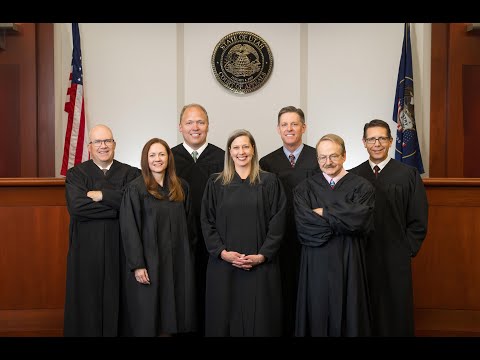
The case drew focused questioning from the panel, which included Judge Ryan Tenney (presiding), Judge Oliver and Judge John Luthy. Appellant counsel Matt Howell said the unblurred video would have shown the alleged victim “stark naked” and that seeing her unedited torso and movements would have “had a real impact on [the jury’s] decision.” Howell argued the video could have undermined the sole witness’s credibility and that, under Salazar, when a case “turns on” one witness, defense counsel has an obligation to present evidence that impeaches that witness.
Natalie Edmondson, arguing for the state, told the court the prosecutor’s office had offered a censored version to preserve the victim’s privacy and dignity and that the unblurred footage “would risk offending the jury” and might inflame juror emotions. Edmondson also said the record shows the victim testified she did not know the video was being recorded and that other evidence — including testimony about intoxication and hotel surveillance showing stumbling — corroborated the state’s claim that the victim lacked capacity to consent.
Why it matters: Howell’s ineffective‑assistance claim focuses on defense counsel’s strategic choice not to admit an uncensored video that the defense says undermined the victim’s testimony. The Robbins argument asks a separate question: whether the alleged victim’s testimony is so inconsistent and uncorroborated that it must be excluded on appellate review, leaving insufficient evidence to uphold the conviction.
Key points from argument
- Video and credibility: Howell told the court the unblurred video would have made visible three things he said the blurred footage obscured: (1) that the victim was “stark naked,” (2) that her clothes were out of her line of sight as she walked from the bathroom, and (3) that Vargas was performing a sexual act. Judge Oliver repeatedly questioned whether showing nudity would necessarily help the defense and asked whether admitting the unblurred footage risked “inflam[ing] the jury.” Howell conceded the unblurred footage carried risk but said Salazar required counsel to present evidence that undermined the sole witness’s credibility.
- Blurring and perception: Counsel for the state said the censored footage conveys that the subject was unclothed and that the victim testified she did not know the video was taken. Edmondson argued the blurred video “shows that it’s skin underneath” and emphasized the state’s efforts to protect the victim’s privacy.
- Robbins claim (inherent improbability): Howell asked the court to apply Robbins and exclude the victim’s testimony as inherently improbable because of “material inconsistencies,” including differing accounts of whether she was clothed on waking and whether she was carried or walked down the hallway. The judges discussed the line between ordinary credibility questions for juries and the narrow appellate Robbins standard that removes testimony only when reasonable minds must entertain a reasonable doubt.
- Corroboration and timing: Edmondson pointed to bartender testimony, receipts, hallway surveillance showing stumbling and a toxicology witness as evidence that the victim’s intoxication was corroborated. Howell countered that much of that evidence post‑dated the alleged sexual assault and that the remaining corroboration was insufficient as a matter of law under Robbins.
Outcome at argument: The court took the case under advisement and said it would issue an opinion in due course. No interim ruling was made from the bench.
What the record shows and what remains unresolved
The transcript shows extended back‑and‑forth about whether the unblurred video would have helped or hurt the defense and whether showing nudity to the jury is a permissible impeachment tactic or merely emotional shock value. The panel repeatedly pressed both sides on the extent to which the blurred video already communicates the key facts (skin tone, movement across the room) and on whether the unblurred footage risked prejudice that could outweigh probative value.
Next steps
The Court of Appeals will issue a written opinion resolving the ineffective‑assistance claim and the Robbins sufficiency argument. The court’s ruling will determine whether Vargas’s conviction stands, whether the Robbins argument requires exclusion of the victim’s testimony for sufficiency review, or whether a new trial or other relief is warranted.