Get Full Government Meeting Transcripts, Videos, & Alerts Forever!
Get email alerts on the Criminal Procedure In Absentia topic
No spam. Unsubscribe anytime.
Appeals court considers whether trial judge erred in proceeding in absentia in Marshall drug case
Summary
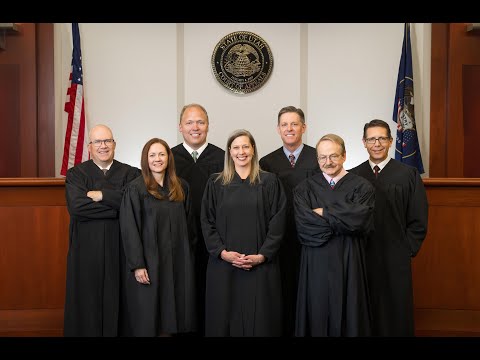
The Utah Court of Appeals heard argument in the appeal of a drug‑distribution conviction in which the defense says the trial court improperly allowed the trial to proceed without the defendant present and imposed a sentence influenced by his lateness; the state argued the appellate record is inadequate and the defendant waived some claims.
The Utah Court of Appeals heard argument in an appeal by a defendant identified in the record as Mr. Marshall who challenges a trial court’s decision to grant the state’s motion to proceed in absentia and contends counsel provided ineffective assistance by failing to object to testimony that the defendant intended to distribute drugs.
Why it matters: The right of a criminal defendant to be present at trial is constitutionally protected. The court’s decision in this appeal could clarify how much inquiry trial courts must make to determine whether a defendant’s absence is voluntary and what record is required to support an in‑absentia proceeding.
Defense argument
Hannah Levitt Howell, appearing for Marshall, told the panel the trial court erred when it granted the state’s motion to proceed in absentia because the state failed to show the defendant voluntarily absented himself. Howell argued the record shows only that court staff “put out word … through the courthouse” and that the state did not present on‑the‑record evidence that it checked hospitals, detention facilities, or otherwise attempted contact; defense counsel also told the panel the trial attorney could not have called Marshall because he did not bring a cell phone. Howell urged the court that the state had the burden to prove voluntariness and that the trial court’s on‑the‑record comments at sentencing showed the court’s decision affected the sentence.
Howell also argued the absence of an adequate inquiry creates a presumption of prejudice that the state must rebut beyond a reasonable doubt; she asked the appeals court to reverse on both the in‑absentia issue and the ineffective‑assistance claim.
State response
Natalie Edmondson, arguing for the state, said there are two threshold problems for Marshall’s appeal: an inadequate appellate record and waiver. Edmondson said the appellate record does not reflect everything that may have occurred during the half hour the court was off the record and that the defendant, as the appellant, bears the burden of assembling any missing record for review. She told the panel that the trial court had some on‑record indications that the defendant had prior attendance issues and that the court was entitled to consider those facts.
Edmondson also argued the evidence against Marshall was strong and that any claimed error was harmless beyond a reasonable doubt — pointing to the traffic stop, the packaging of the drugs, and the absence of common indicia of dealing such as scales or large amounts of cash.
Panel questioning and legal issues
Judges pressed both sides on what constitutes an adequate voluntariness inquiry under Utah precedent and whether appellate harmless‑error analysis should examine only the trial court’s inquiry or whether it may also consider whether the defendant’s actual presence at trial would have changed the outcome. The panel queried whether practical measures — calling the defendant, checking jail or hospital records — are required in every case or only when circumstances make them necessary.
Outcome and next steps
The court took the matter under advisement and said it will issue a written opinion. Counsel for both sides asked the panel to clarify whether the adequacy of the record or the merits of voluntariness should control the prejudice inquiry in future cases.