Get Full Government Meeting Transcripts, Videos, & Alerts Forever!
Get email alerts on the Criminal Justice Self Defense Instructions topic
No spam. Unsubscribe anytime.
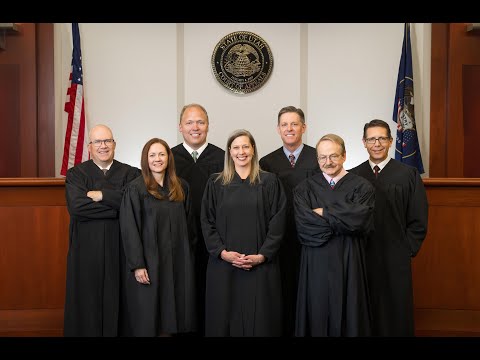
Utah Court of Appeals hears challenge to jury instructions in Carl Johnson manslaughter conviction
Summary
Appellate lawyers argued whether jury instructions and counsel's trial strategy left jurors unable to apply distinct forms of self-defense, a dispute the court took under advisement and said it would issue a written opinion.
Appellate arguments in State v. Carl Johnson focused on whether the trial court's jury instructions misled jurors about "perfect" versus "imperfect" self-defense and whether those instructions, together with defense counsel's trial strategy, prejudiced the defendant.
The issue matters because, the appellant argued, the instructions and verdict forms could have led jurors to conclude that if the state failed to disprove self-defense as to murder, "the defendant may only be convicted of manslaughter," effectively removing acquittal as an option for lesser charges. Appellant counsel said that ambiguity likely affected at least one juror and therefore undermined confidence in the verdict.
Appellant's counsel (identified in the transcript as defense counsel) told the three-judge panel that evidence at trial supported a full justificatory self-defense instruction. Counsel described trial testimony placing the shooting within about a minute of the earlier altercation, argued that the position of the parties on the stairwell made a shot in the back consistent with an imminent threat, and said a paramedic's notes and photographs showed physical signs consistent with strangulation. "It only takes a couple minutes, right, to get someone to the point where they have no oxygen," counsel said, and urged that the jury should have been able to choose between acquittal and a manslaughter verdict based on clearly explained instructions.
The State, through prosecutor Karen Kluthnick, acknowledged that the instructions require some effort to read together but urged the court to view them in context. "Reading the instructions as a whole, the jury wasn't going to be confused," Kluthnick said, arguing defense counsel repeatedly framed the case to the jury as classic (perfect) self-defense rather than imperfect self-defense and that a reasonable jury would apply the law consistently with the parties' arguments. The prosecutor also urged that any perceived defects did not cause prejudice because the defendant's own statements and the trial evidence undercut a full acquittal theory.
Judges on the panel pressed both sides about how jurors would interpret the instructions in combination with counsel's opening and closing arguments and whether the placement and wording of particular sentences (the briefs singled out Instruction 36 and Instruction 42) could reasonably be read to require a manslaughter conviction when the state had not met its burden on murder. One judge noted the common-sense problem that a jury comparing the murder elements (which explicitly reference self-defense) to the manslaughter elements (which do not) might attach significance to the absence.
Both parties acknowledged factual tensions in the record: witnesses disagreed about seeing choking or the exact sequence of events; the defense relied on testimony that the shooting occurred shortly after the scuffle and that the victim appeared to be advancing; the State highlighted evidence tying the defendant to the shooting and argued alternative manslaughter theories such as reckless conduct could explain the verdict.
The court took the matter under advisement and said it would issue a written opinion in due course.
Background: During oral argument counsel referenced trial exhibits and jury instructions by number and several supplemental record entries; the record before the appeals court includes jury instructions and the verdict form the parties discussed. The appellant framed a second competency-related complaint as ineffective-assistance-adjacent, arguing that trial counsel should have sought corrected instructions or clarified for the jury the distinction between the two forms of self-defense.
The court did not announce a decision from the bench.
Votes at a glance: no bench decision issued; the court said it would issue a written opinion.