Get Full Government Meeting Transcripts, Videos, & Alerts Forever!
Get email alerts on the Coverage Primatic Payments topic
No spam. Unsubscribe anytime.
Dispute at court focuses on PRIMatic accounting and whether Weston's family purchased coverage before crash
Summary
Weston’s counsel argued that three undisputed facts — a December billing, a $158.92 payment, and the PRIMatic agreement’s indemnity provision — compelled a finding of coverage for Jared Weston on Feb. 15, 2004; Farmers and PRIMatic disputed whether payments were forwarded and whether the policy was canceled correctly.
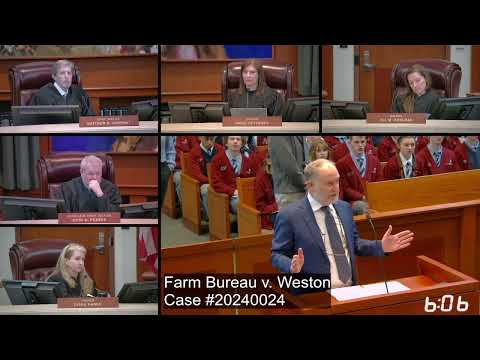
Counsel for Jared Weston told the Utah Supreme Court that three facts in the record compelled coverage for Weston on Feb. 15, 2004: a December 14, 2003 billing notice stating that paying $158.92 would buy coverage for Jan. 18–Feb. 17; the undisputed acceptance and cashing of a $158.92 payment; and a PRIMatic contract provision promising to forward collected funds to Farmers Insurance to extend coverage.
"Three undisputed facts compel a conclusion of coverage for Jared," Weston’s counsel said at argument, explaining that PRIMatic’s agreement included an express indemnity promise that required PRIMatic to indemnify a customer if PRIMatic failed to forward collected funds so the insurer would cover the paid period. Counsel argued the payment was accepted no later than Jan. 15 and that, under the PRIMatic agreement, the money should have been forwarded so that the insurance would have extended through Feb. 17.
Farmers and PRIMatic disputed whether the documents in the record showed a lawful cancellation and whether any premium was unpaid when due. Farmers’ counsel emphasized endorsement language and statutory cancellation mechanics, contending that the policy’s endorsements and a notice to cure tied premium due dates to the policy’s monthly cycle and that the record supported a finding of cancellation after a prescribed cure period. Counsel for Farmers told the court that the endorsement and billing notices should be read together to determine when premiums were due.
Key factual details in the record: Counsel and the court discussed the following contested points from the trial record — the $158.92 amount, that PRIMatic cashed a check dated Jan. 15, 2004, a billing statement that referenced a Jan. 18–Feb. 17 coverage period, and whether PRIMatic was authorized to collect premium or to issue cancellation notices on Farmers’ behalf. Counsel for Weston contended that no document in the record showed that Farmers had ever notified Weston the insurer itself had canceled the policy for nonpayment.
Why it matters: The court’s resolution of whether PRIMatic’s acceptance of $158.92 and the PRIMatic agreement’s terms created coverage on Feb. 15 will determine whether Farmers had an obligation to indemnify or defend and could change who ultimately bears the confirmed arbitration judgment.
Case posture and next steps: The justices questioned witnesses’ counsel about endorsement 22 (the monthly‑period endorsement), the billing and deposit records, and whether any writs or enforcement steps changed the status of a confirmed award. The court took argument and will resolve whether the record supports coverage on the accident date or whether a valid cancellation and cure process occurred.