Get Full Government Meeting Transcripts, Videos, & Alerts Forever!
Get email alerts on the Arbitration Judgment Expiration topic
No spam. Unsubscribe anytime.
Justices question whether arbitration‑confirmed judgment remained enforceable after eight years
Summary
Counsel disputed whether the arbitration award confirmed in district court had expired and whether the court retained jurisdiction to modify or enforce the confirmed award; argument focused on the Utah Arbitration Act, Rule 7, and Rule 54(b).
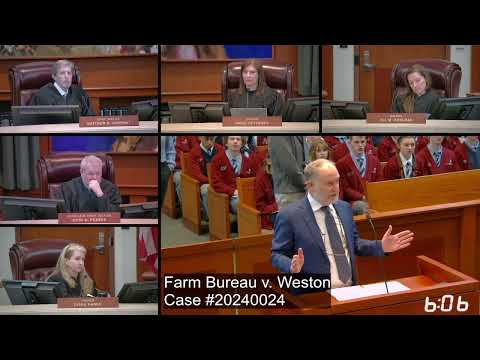
At oral argument, counsel disputed whether a judgment confirming an arbitration award remained enforceable more than eight years after confirmation and whether the Utah Supreme Court had jurisdiction to decide that question. The issue arose from competing arguments about the Utah Uniform Arbitration Act and the effect of converting an arbitration award into a court judgment.
Counsel for Farmers told the court that Rule 7’s language — permitting an order to pay money to be enforced in the same manner as a judgment — supports enforcing a conforming judgment even if the underlying arbitration award would otherwise be a non‑final order. “Rule 7 has language that's very similar to the Arbitration Act ... an order to pay money can be enforced in the same manner as if it were a judgment,” counsel argued, urging that confirmation and entry of a conforming judgment permit enforcement tools normally available to judgments.
Opposing counsel for Weston countered that the procedural history and the parties’ actions left open the question of finality and modification, and he said the district court had treated the award as interlocutory. Weston’s counsel also argued that Farmers did not preserve some arguments below, and that certain jurisdictional objections could not be waived. “The court doesn't have jurisdiction because Weston did not appeal that,” one counsel said when asked about the best argument that the award had not expired.
Why it matters: The parties dispute what procedural status attaches to a confirmed arbitration award — whether and when it converts into an enforceable judgment and whether an enforcement window (discussed as eight years in the briefing) applies. The answer affects whether parties can collect on awards and whether a later court can modify a judgment after an extended lapse.
Legal context: Counsel debated interplay among the Utah Uniform Arbitration Act (UUAA), Rule 7 (about conforming judgments for arbitration awards), and Rule 54(b) and other finality doctrines. They also discussed statutory enforcement windows and the possibility of vacatur or modification for grounds such as fraud or collusion.
Result in argument: Justices pressed both sides on whether confirmation produced a final, enforceable judgment and on whether Farmers had opportunities to challenge the arbitration earlier. The court took the arguments and will resolve whether the confirmed arbitration judgment remained enforceable and whether the Supreme Court has jurisdiction to decide challenges that the parties characterized as either preserved or waived.